MEI T-15 series
Contents
Overview
T-15 Series from Mechanical Enterprises comprises sealed-tube ultra-low-profile mechanical contact switches. T-15 Series shares US patent 4600819 “Switch assembly”, filed in March 1985, with the exposed conductive rubber type T16 Series that is almost identical to T-15. Previously, T16 switches were incorrectly understood to be T-15, but as further information has come to light, it has become clear that the two types described in the patent were separate series. In their EEM 1988–89 and 1989–90 advertisements, T-15 was said to be produced and tested on fully-automated machinery in the US.
In both the patent and the Electronic Engineers Master (EEM) 1985–86 advertisement, the switch is depicted bare without a cover. For some reason, MEI offered their switches both with and without a cover. This is why, when the cover is removed, the plunger does not come out: the switch is designed to function without a cover. T-15 is extremely rare, and the only known examples are fitted with a cover just as all known T16 examples are.
At the time of writing of the EEM 1985–86 advertisement, the optional “hinge cover” was not yet available, being expected in the coming August (1985). The “hinge cover” contains the mounting points for the stabiliser wire, but also allows for “sub-panel mounting”.
T-15 series (and T-15S in particular) bears some resemblance to DN series, including the ultra-low profile, the bare assembly design, and the sealed contacts. Where DN series presses metal balls against concave contact surfaces, T-15S series presses a metal spring against the outside surfaces of the contacts.
The following (unfortunately very small) photos from Meryl Miller depict a variation of the switch with an integrated stabiliser (centre) alongside an unidentified Futaba switch and a Cherry M62-0100:


Keystem
The 1985 advertisement states:
“The T-15 keytop mount is the most frequently used cruciform style (equivalent to Cherry MX and others). Therefore several keytop manufacturers in the U.S. and abroad are able to supply, without a tooling charge sculptured and conventional keytop sets for the T-15.”
T-15S
T-15S is depicted as uncovered; there is no information to indicate what “S” denotes.
Surprisingly, it was possible to order clicky and alternate action versions of the switch. This is why the switch only has a single piece of rubber on the left, as the space to the right is left open for the placement of a click or alternate action mechanism.
The 1985 advertisement lists the following part numbers:
| Part | Description |
|---|---|
| T-15SB | Basic momentary |
| T-15SC | Momentary with click |
| T-15SA | Alternate action |
The photos below are not the most detailed (in part due to how small the switch is) but they should give an idea about the design. This is the covered version of T-15S, which may have a different subseries name. These are sample parts that Meryl Miller collected a long time ago; two have been destroyed in order to depict their internal structure, and one remains intact.
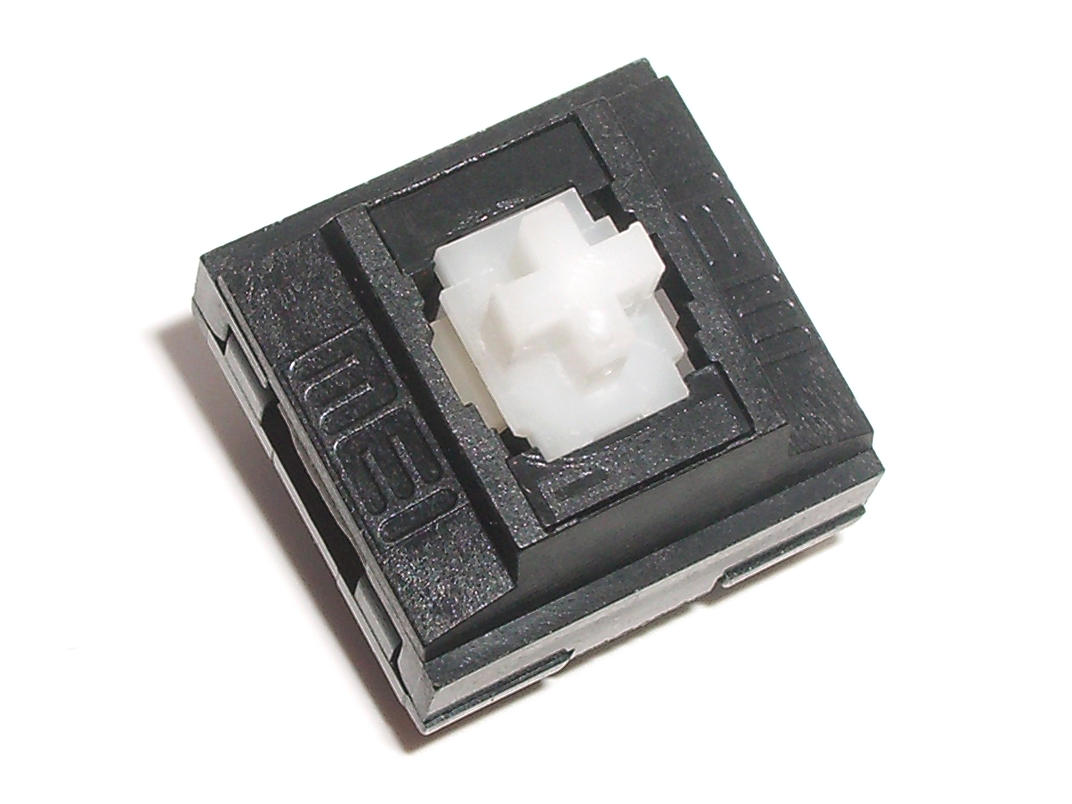 Top view of covered variant
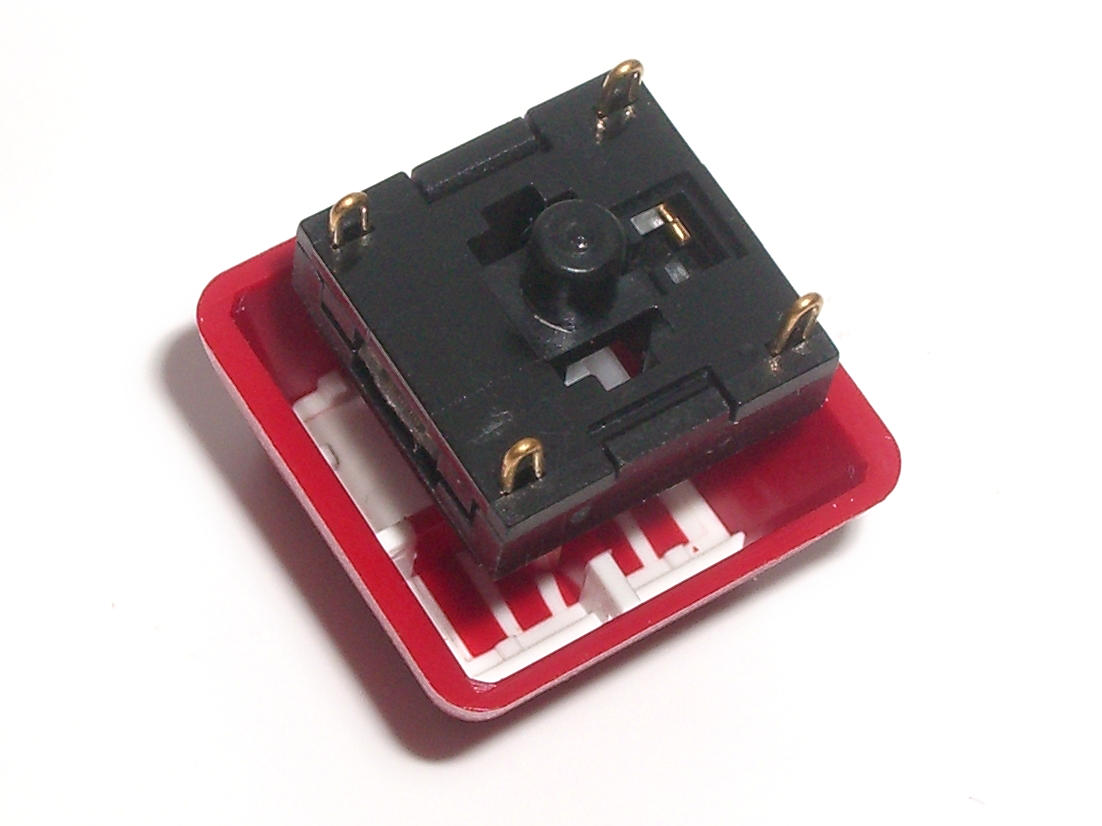 Cherry MX mount test using Tai-Hao keycap
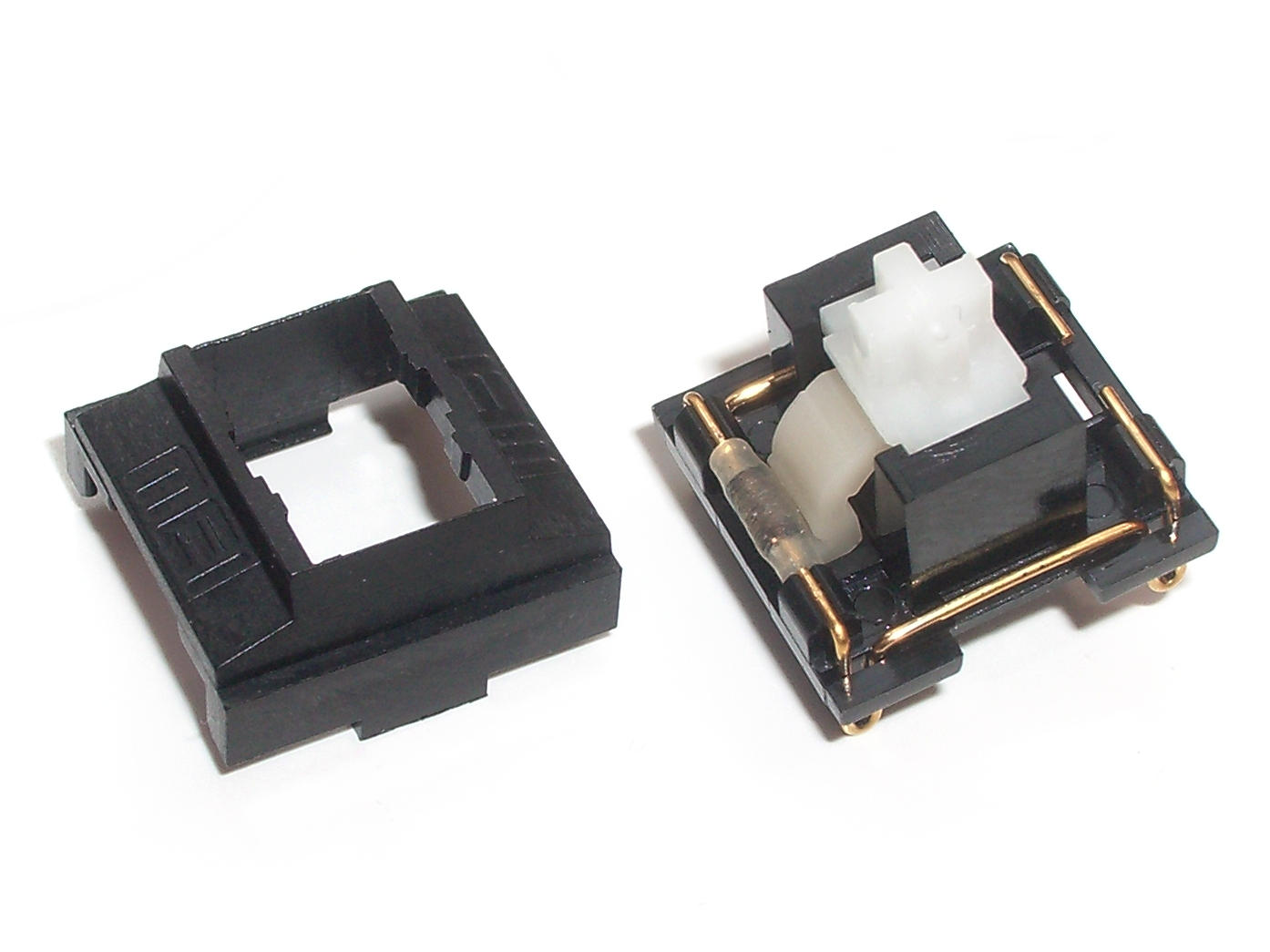 Cover removed from the switch
 Single elastic piece on one side in the sealed version
 Clip-in contact rails
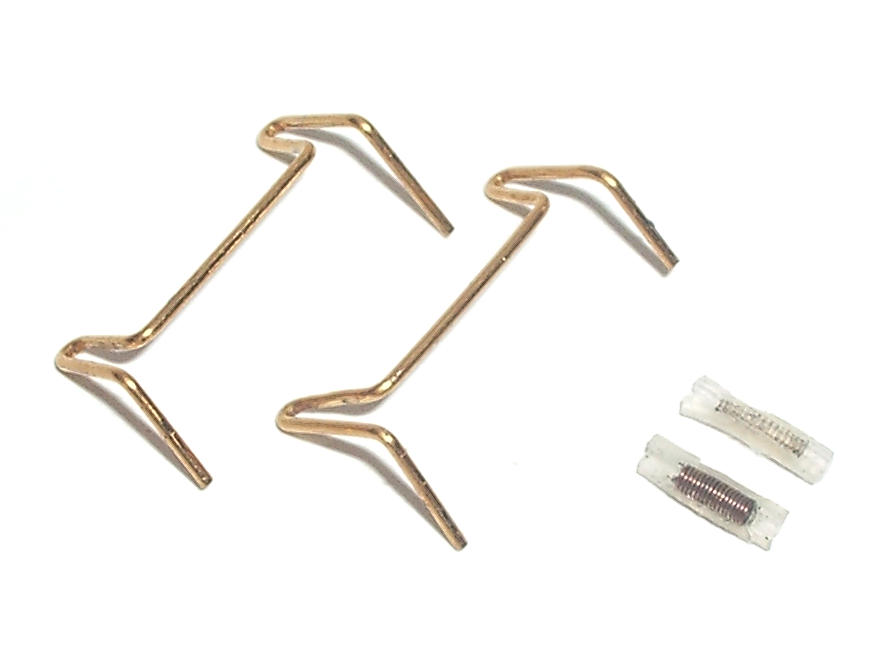 Switch contacts; the rubber tube has been cut open to show the spring inside
Specifications
| Momentary | Alternate action | |
|---|---|---|
| Contact rating, DC resistive | 1 W max | |
| Voltage | 24 V max | |
| Initial contact resistance | 100 mΩ max | |
| Plunger travel | 3.8 mm | |
| Pretravel | 1.9±0.6 mm | |
| Operating force to make | 65±20 gf | |
| Temperature range, operating | −20°C to 65°C | |
| Temperature range, storage | −40°C to 85°C | |
| Contact bounce | 5 ms max | |
| UL flammability rating | 94-HB | |
| Life, actuations | 20×10⁶ | 10×10⁴ |
Documentation
All literature scanned by Bitsavers unless otherwise noted.
- T-15S sealed contact advertisement, Electronic Engineers Master Catalog 1985–86 Volume B
- MEI advertisement, Electronic Engineers Master Catalog 1988–89 Volume B (better scan from the 1989–90 edition)