Wall boxes
Contents
Overview
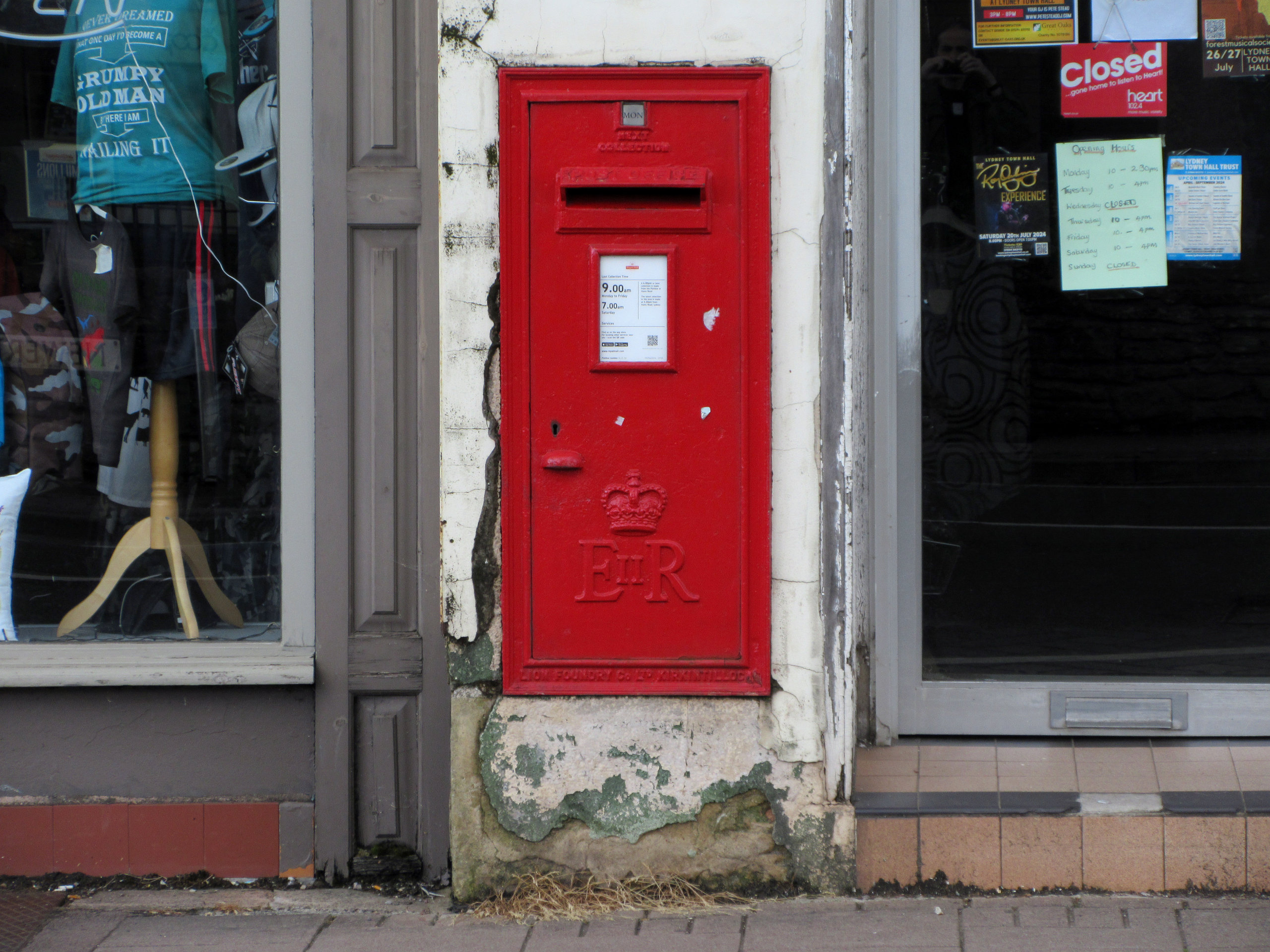
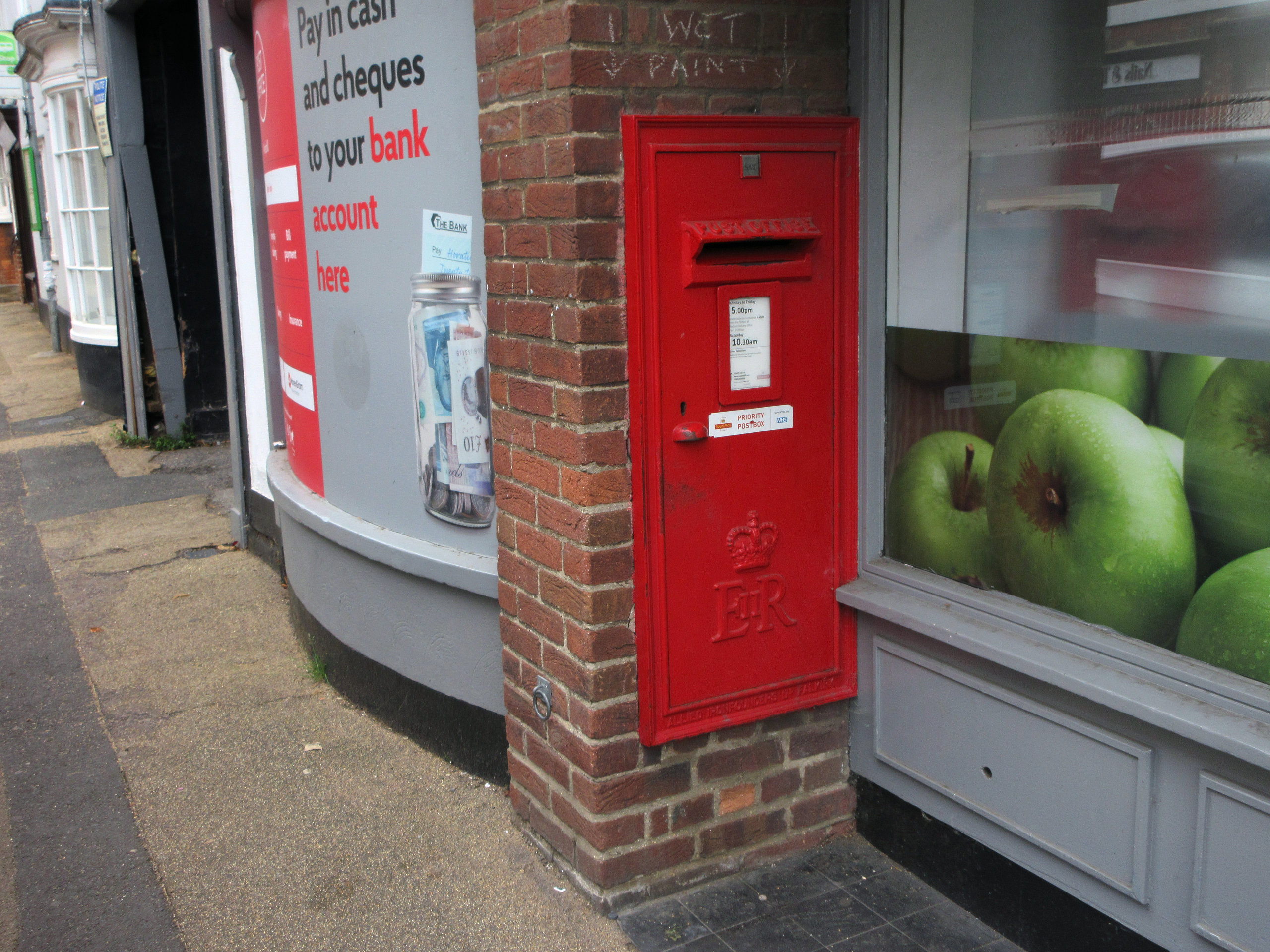
Wall boxes are so-named as they are designed to be built into a wall. This can be an exterior wall of a building or wall enclosing a property. Being (apparently) cheaper to manufacture than a pillar box, in many areas they were built into a dedicated brick column. They are no longer manufactured, having been largely superseded in low-density areas with lamp boxes. Lamp boxes can even be found embedded in both walls and brick columns just as wall boxes were designed to be installed.
In southern UK at least, the vast majority of wall boxes seem to have been supplied by W T Allen & Co of London.
Examples


Types
National Standard
Early national standard wall boxes manufactured by Smith & Hawkes.
Typical
The majority of wall boxes follow the typical pattern, introduced in the reign of Queen Victoria and continued through to Elizabeth II, during whose reign they were discontinued. Standard wall boxes were supplied in three sizes: A, B, and C. A-size is the largest and C-size is the smallest. C-size wall boxes are commonly found as VR and GR, and occasionally as EVIIR, and so far, not as any monarch afterwards. VR wall boxes are most commonly C-size, while GR, GVIR and EIIR wall boxes are most commonly B-size.
The Colne Valley Postal History Museum’s Elizabeth II page indicates that variants of each of the three sizes were manufactured with both front and rear doors, that could be cleared from the outside and from the inside (within the post office). These were given size designations of D, E and F, corresponding to the A, B and C sizes. These can be identified by the lack of a collection plate holder, although in some cases these have been retrofitted.
Original manufacturing was by W T Allen, with other manufacturers involved later.
An 8″ aperture was standard originally; this was later changed to 10″.
One in Every Village
“One in Every Village” was a national scheme to ensure that each village had access to at least one post box with a wider aperture. Where a C-size wall box was the largest post box available, the aperture was enlarged by cutting away the old aperture (and hood) and fitting a replacement panel containg a new, wider aperture and corresponding hood.
Ludlow and related
Ludlow wall boxes are low-cost wooden wall boxes. The idea of a wooden wall box started with Cole in Birmingham, but as the majority were manufactured by James Ludlow and Company, the name “Ludlow” was adopted for all of them collectively. The term “Ludlow” may also, for convenience, encompass wall boxes constructed by local carpenters rather than purchased from a manufacturer.