Lamp boxes
Contents
Overview
Lamp boxes were designed in 1896 as convenience post boxes for London squares; they found favour in low-volume areas and disappeared from the London squares [History/PM]. They are smaller and cheaper than wall boxes and do not require the expense of a dedicated brick column to house them.
Lamp boxes should not be confused with pedestal boxes, which are purely stand-alone types that are not attached to walls or posts.
Attachment
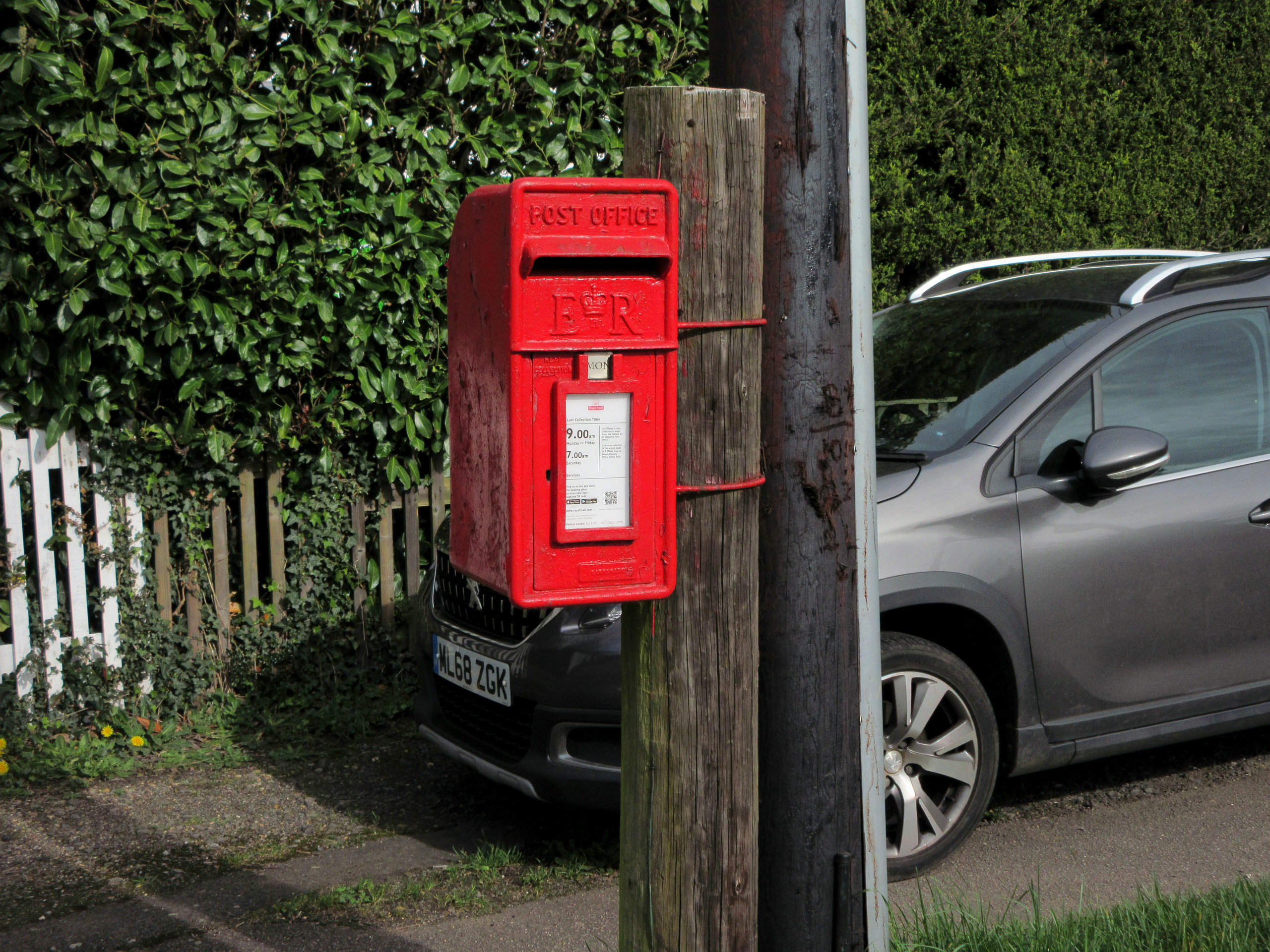
Designed to be attached to street lamps and telegraph poles (hence the name), they were also embedded into walls and (perhaps this came later) built into brick columns just as with wall boxes. In practice, they are seldom found attached to street lights; the majority are attached to a dedicated metal post (bearing a flat platform on top to support the post box) or to a short wooden post.





Types
“Hovis”
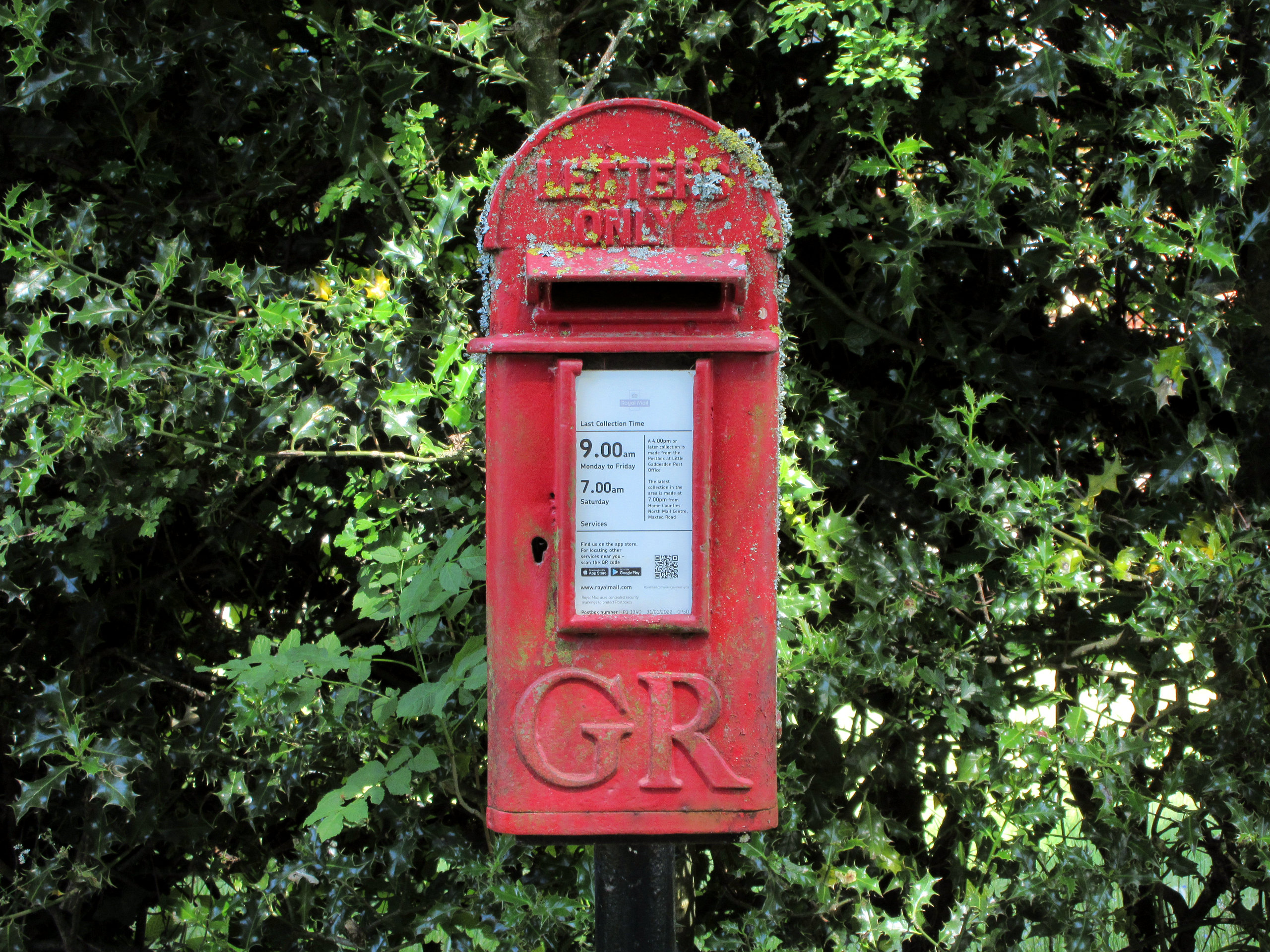
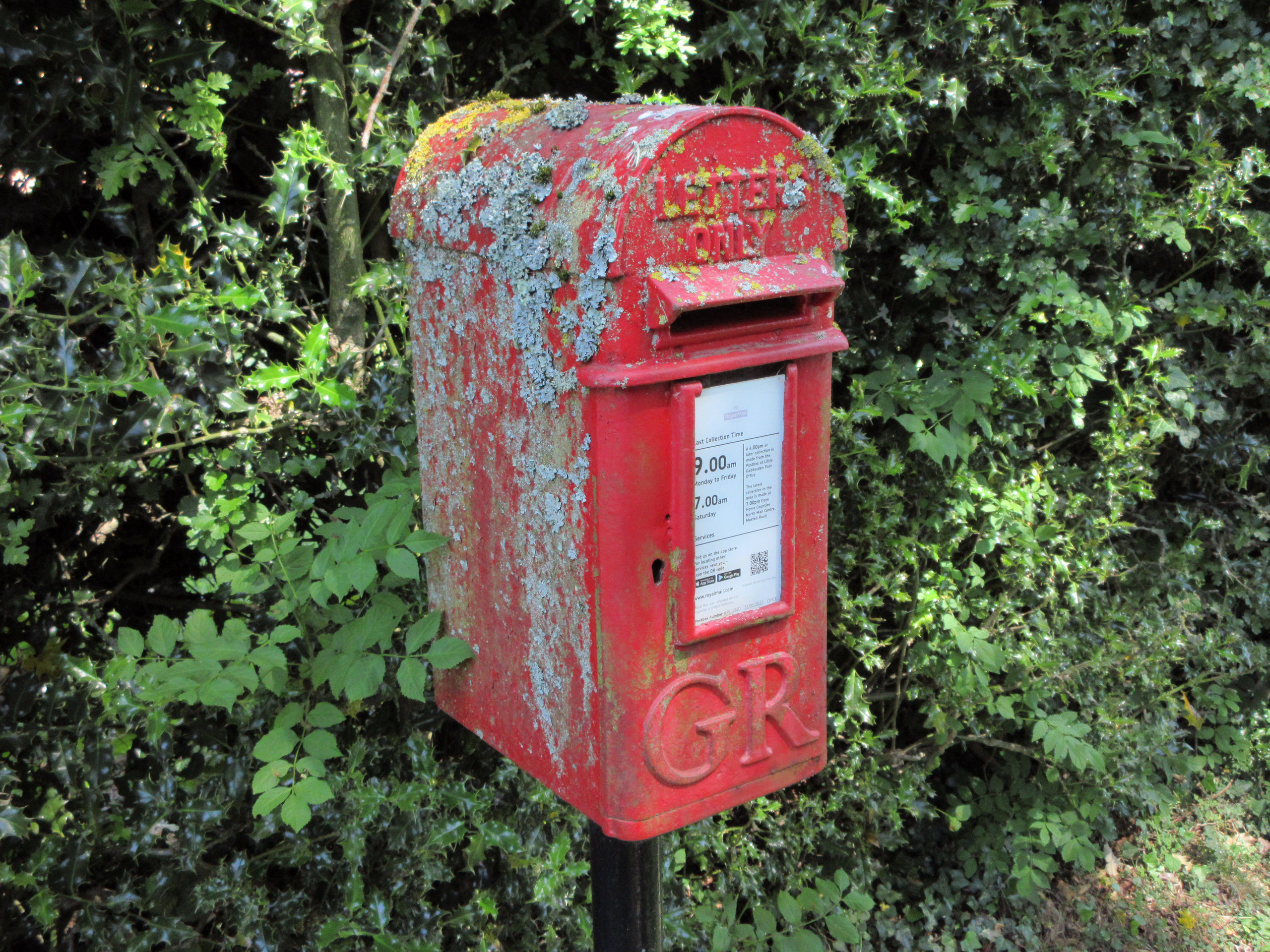
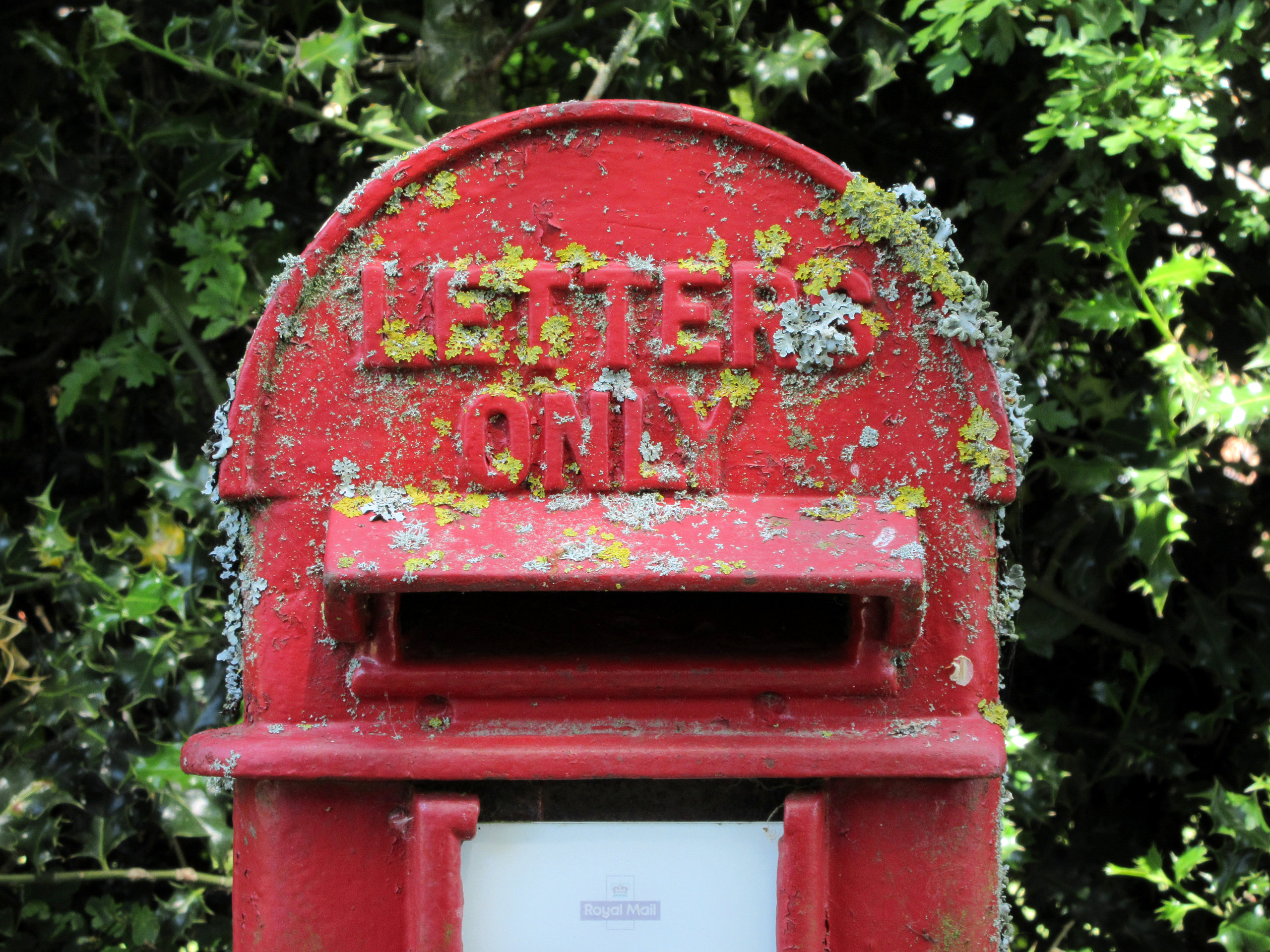
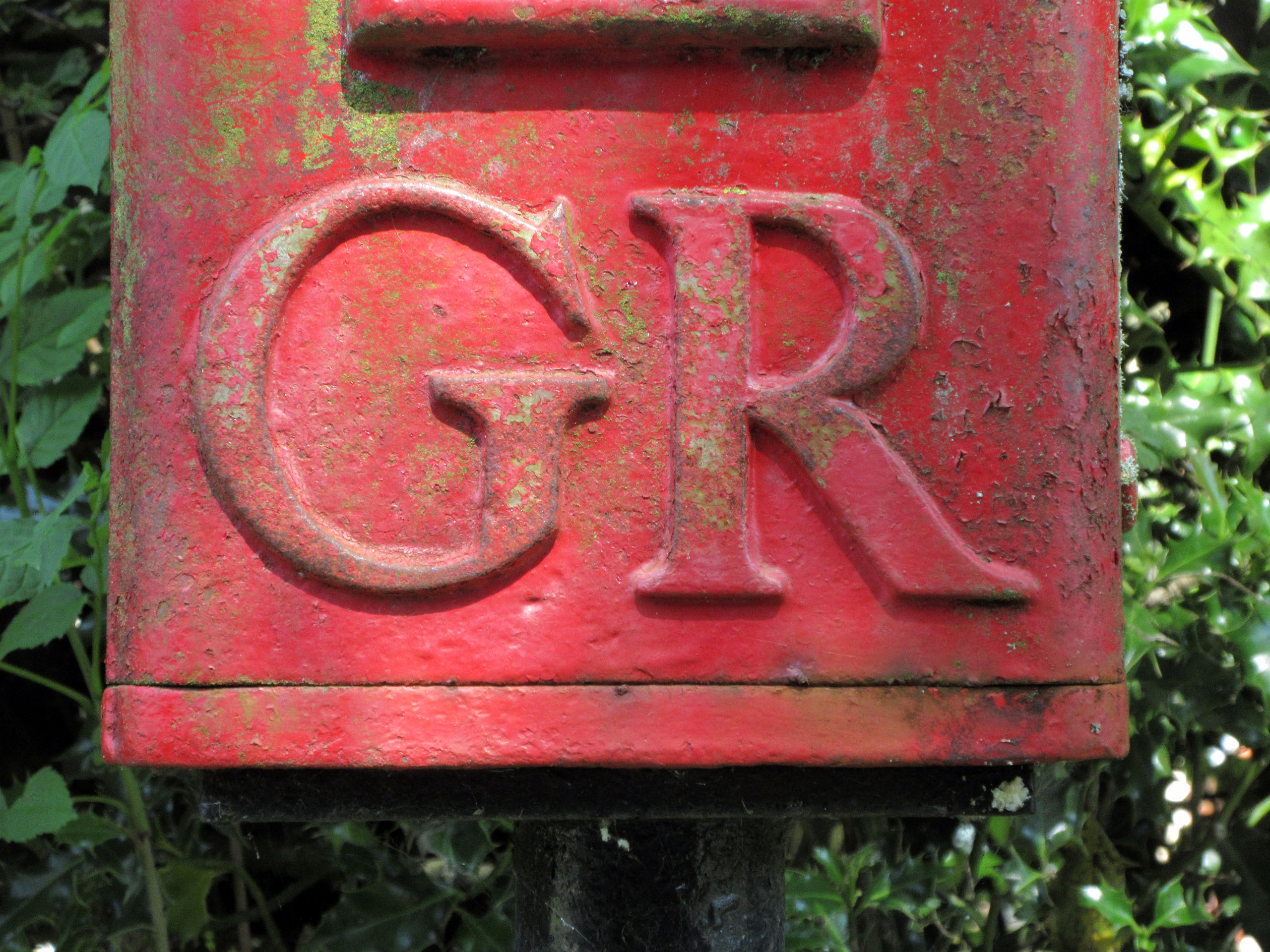
Arched-top type, typically GR but also VR and EVIIR, commonly described as the “Hovis” design due to the shape (which resembles a loaf of bread).
At least two GR examples in Hertfordshire—in Tring and in the adjacent village of Wigginton—have been Romecced. Throughout Hertfordshire and beyond there are many examples of Romec lamp boxes in areas where one would have expected there to have been a post box for decades, suggesting that more Hovis types (and possibly also waggon top types) have been replaced. One suggested reason is that the vintage lamp boxes are too easily stolen (unlike wall and pillar boxes); replacement lamp boxes will also have wider apertures.
Depicted below is the only example encountered so far:
“waggon top”
The successor to the “Hovis” type. Depicted below again is the only example found in range so far:
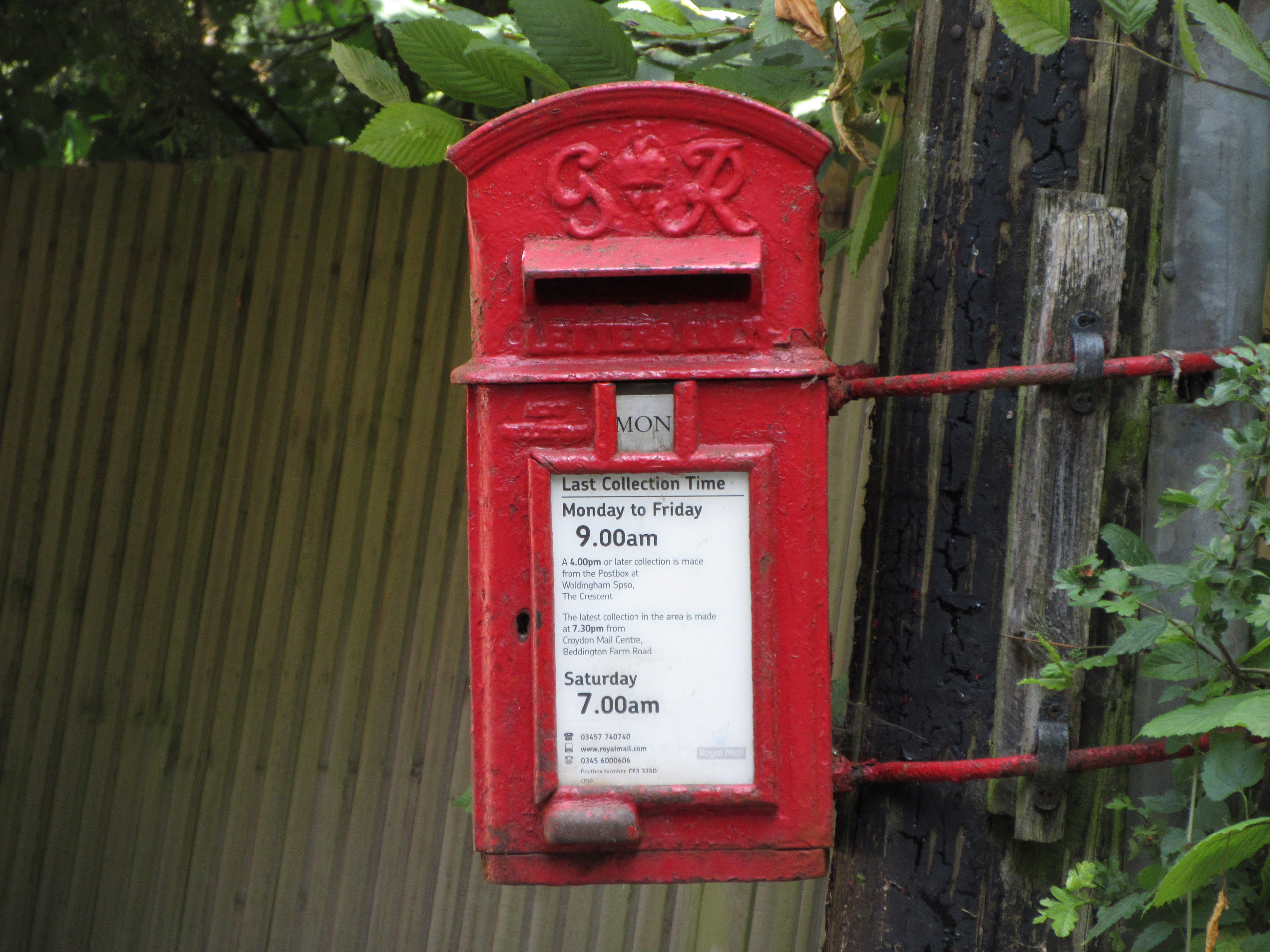


There is a nice wall-mounted example that will become reachable should East–West Rail ever enter passenger service.
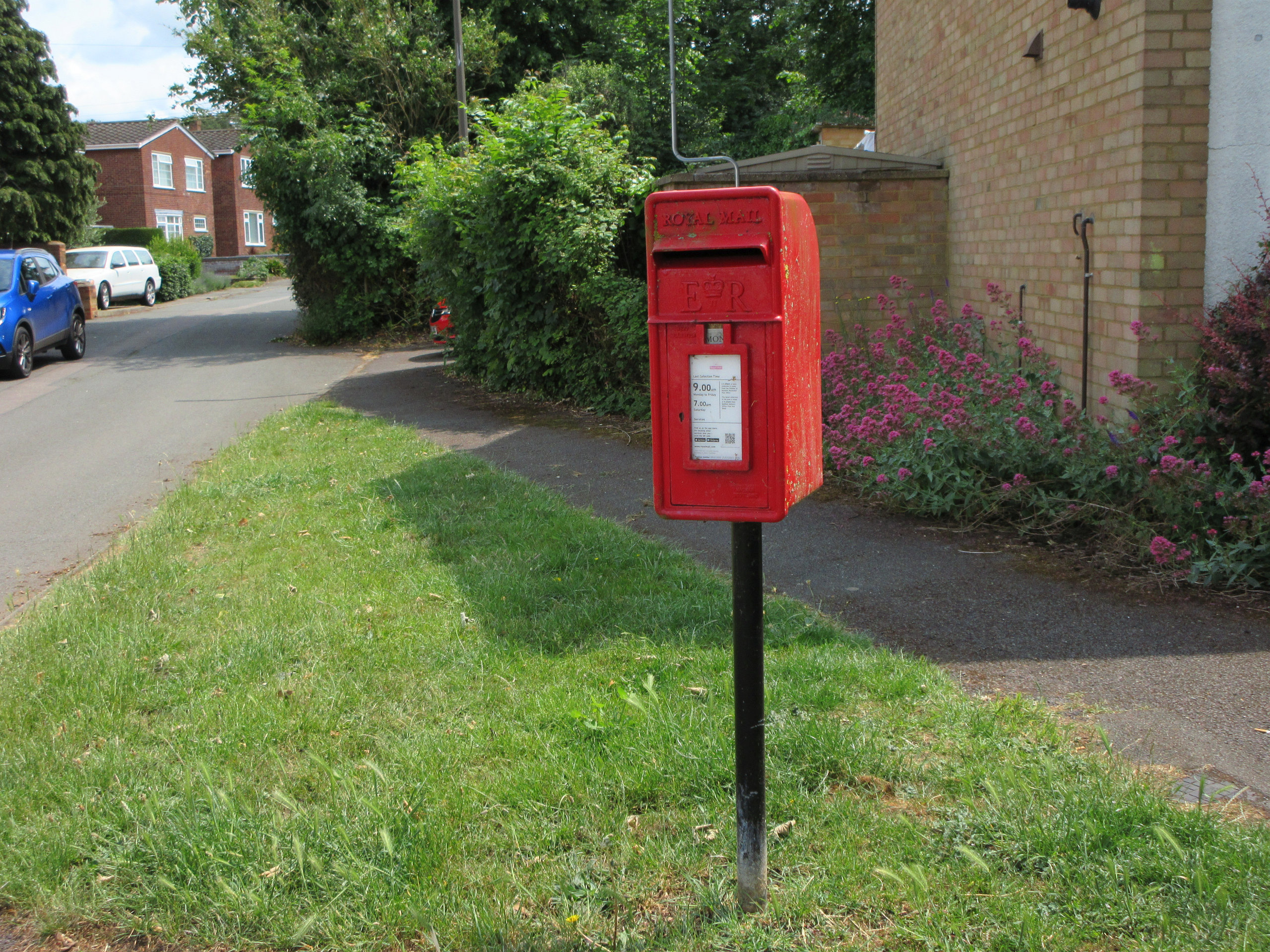
Typical
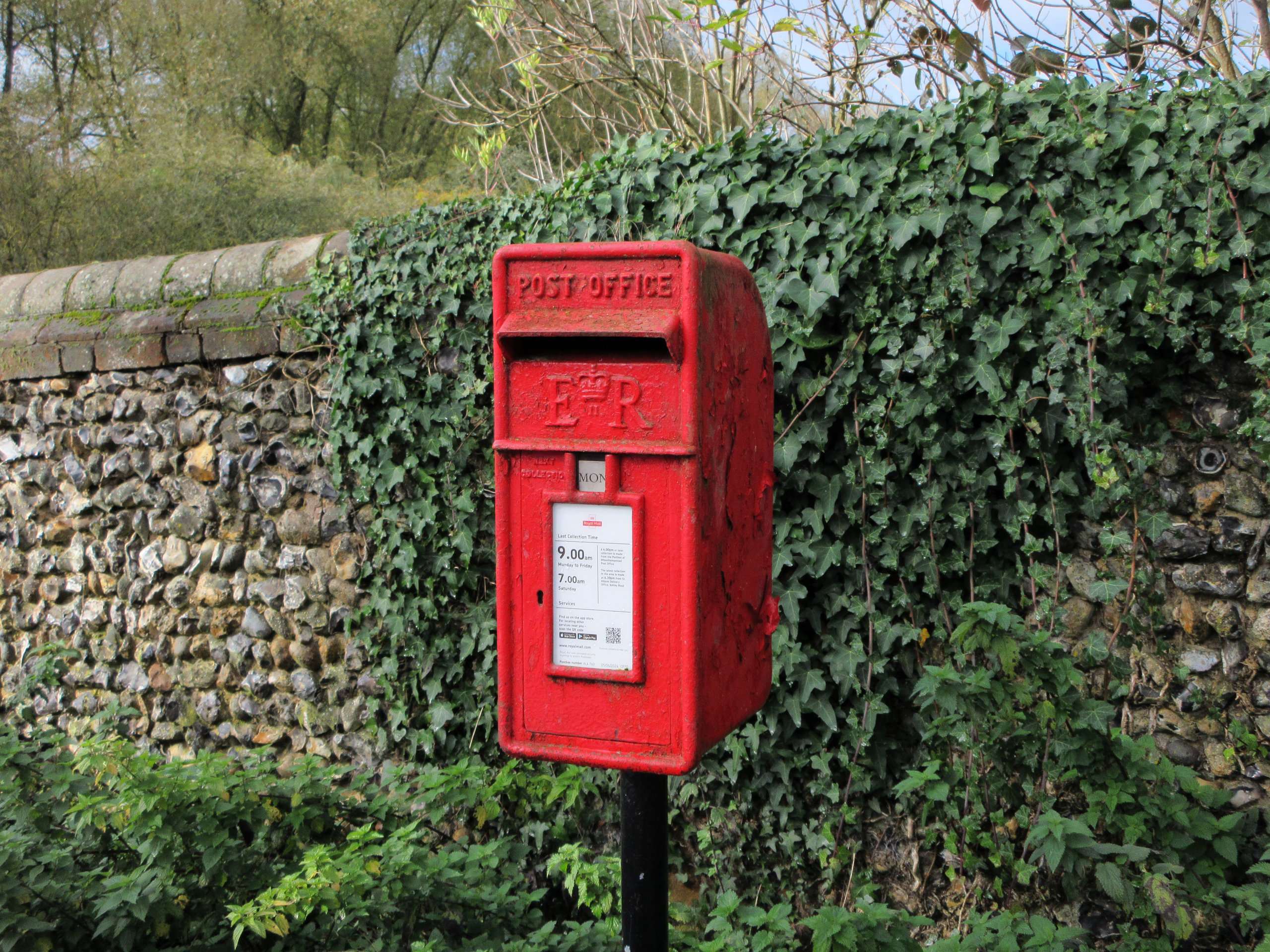
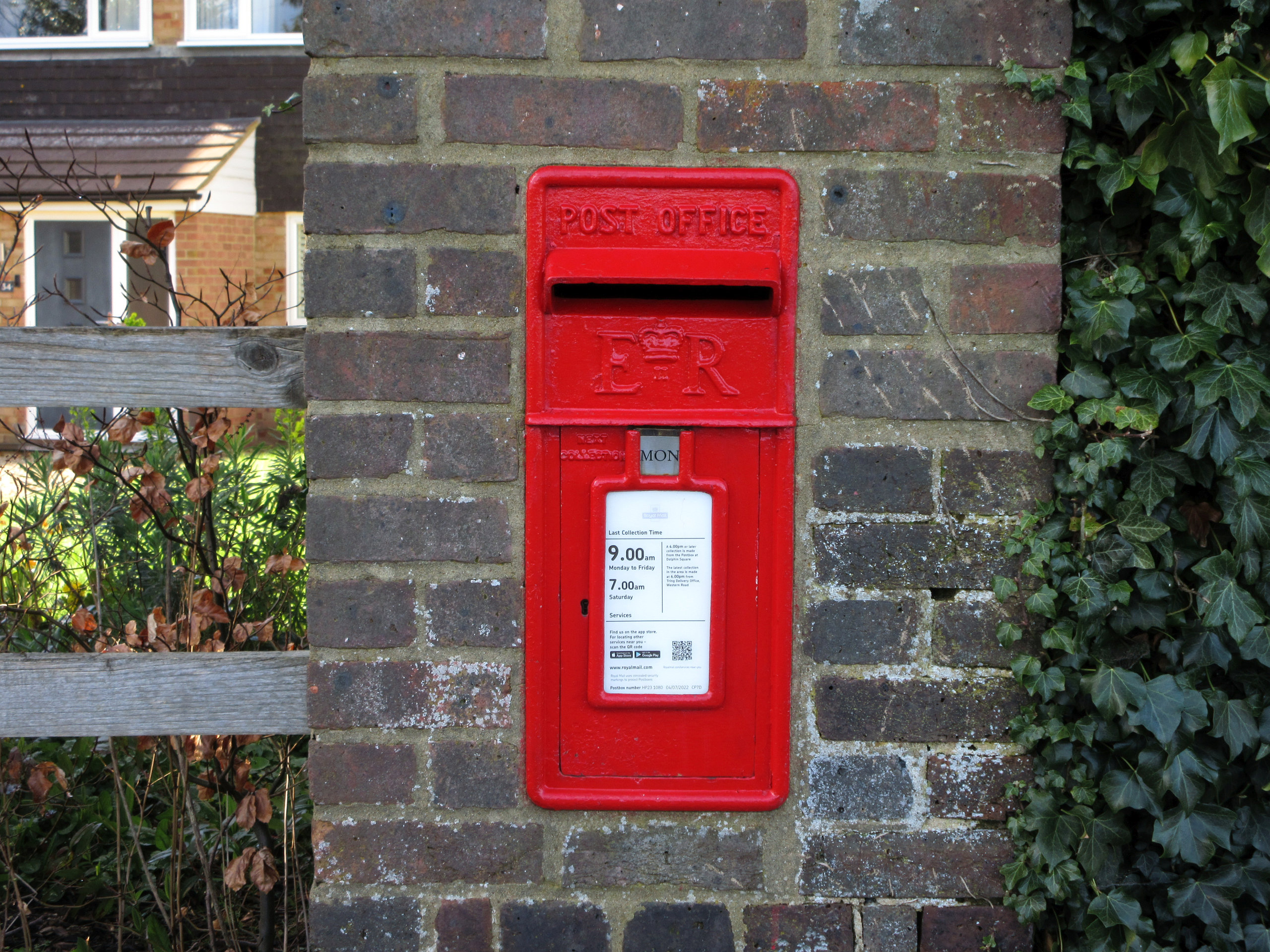
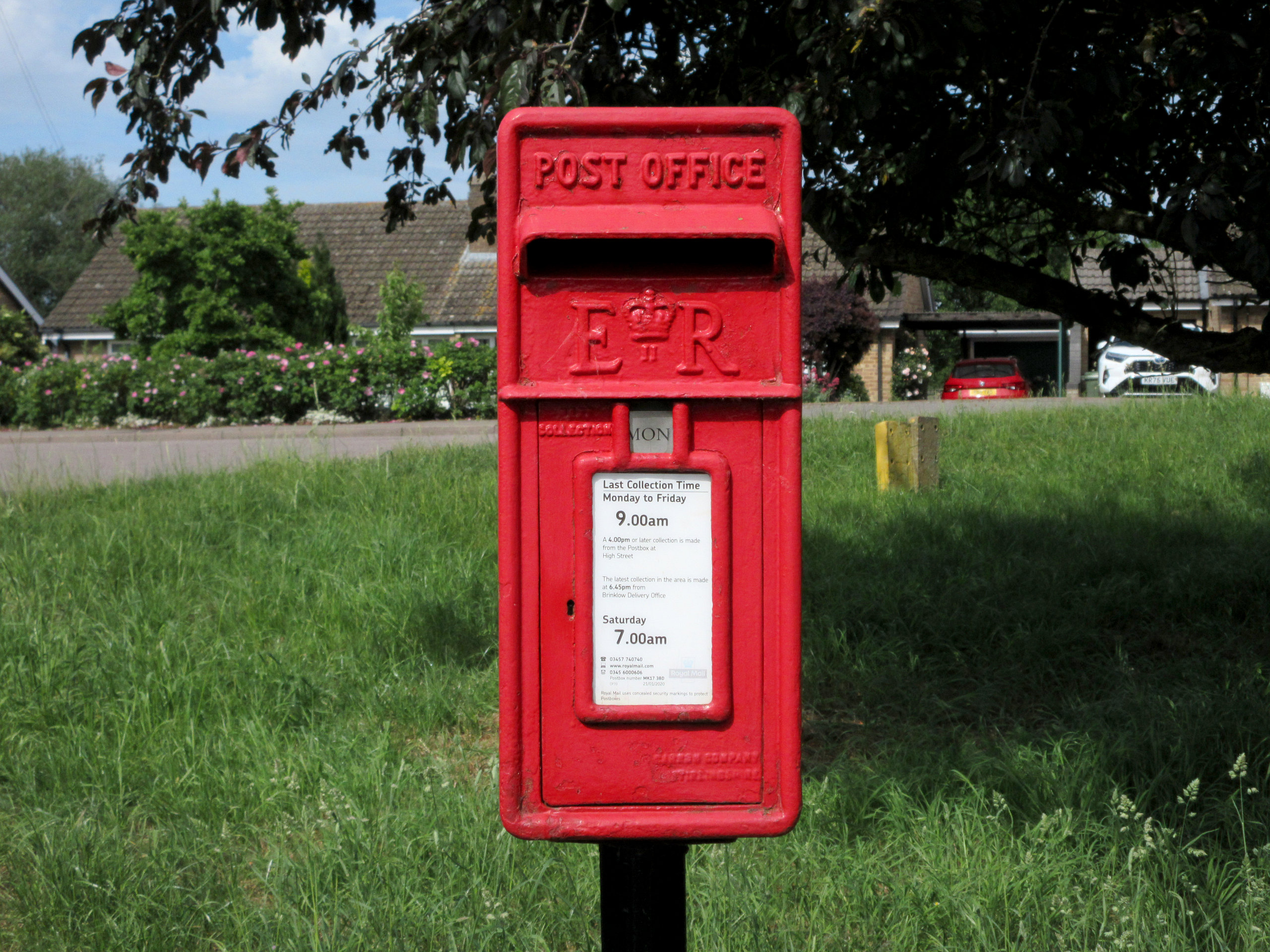
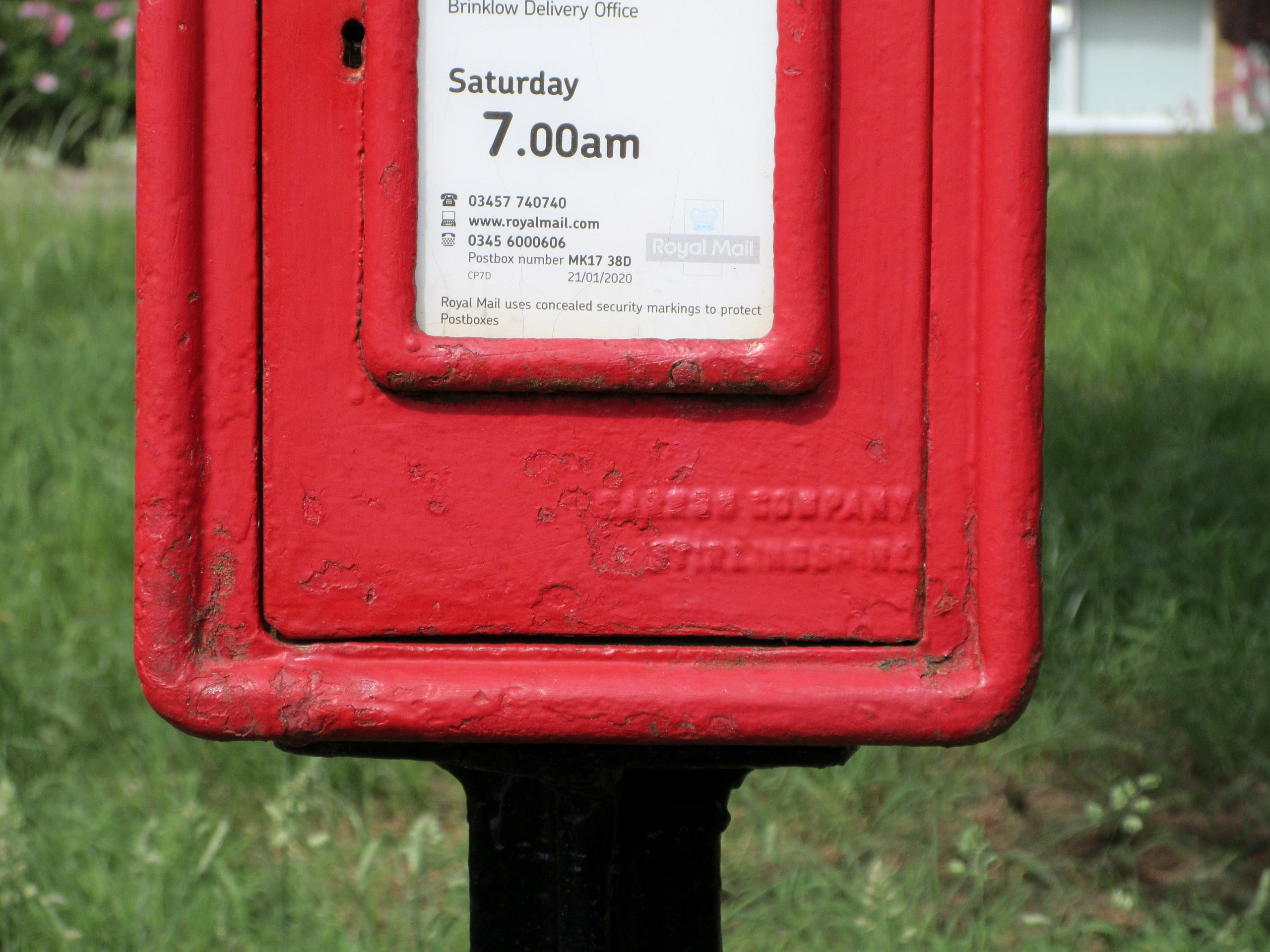
The typical design of lamp box, introduced in 1940 during the reign of George VI. There are subtle variations in design and they are almost always EIIR. They are said to comprise a steel back and a cast iron front; this is demonstrated by a modern example where the back is dented, something that would not occur with cast iron.
The various types (distilled from [EIIR-2/CVPHM]):
- 1940 pattern: introduced as GVIR and transitioned to EIIR in 1952
- 1977 pattern: the cast iron cover started being attached using four rivets (two each side) into lugs, instead of six internal screws
- 1980: as above (still 1977 pattern), but the metal frame that holds the collection information changed from rounded profile to flat profile
- 1994: as above (still 1977 pattern), but the “POST OFFICE” inscription was replaced with “ROYAL MAIL” due to divestment

1940 pattern
The only GVIR type encountered so far was a replica.



Romec
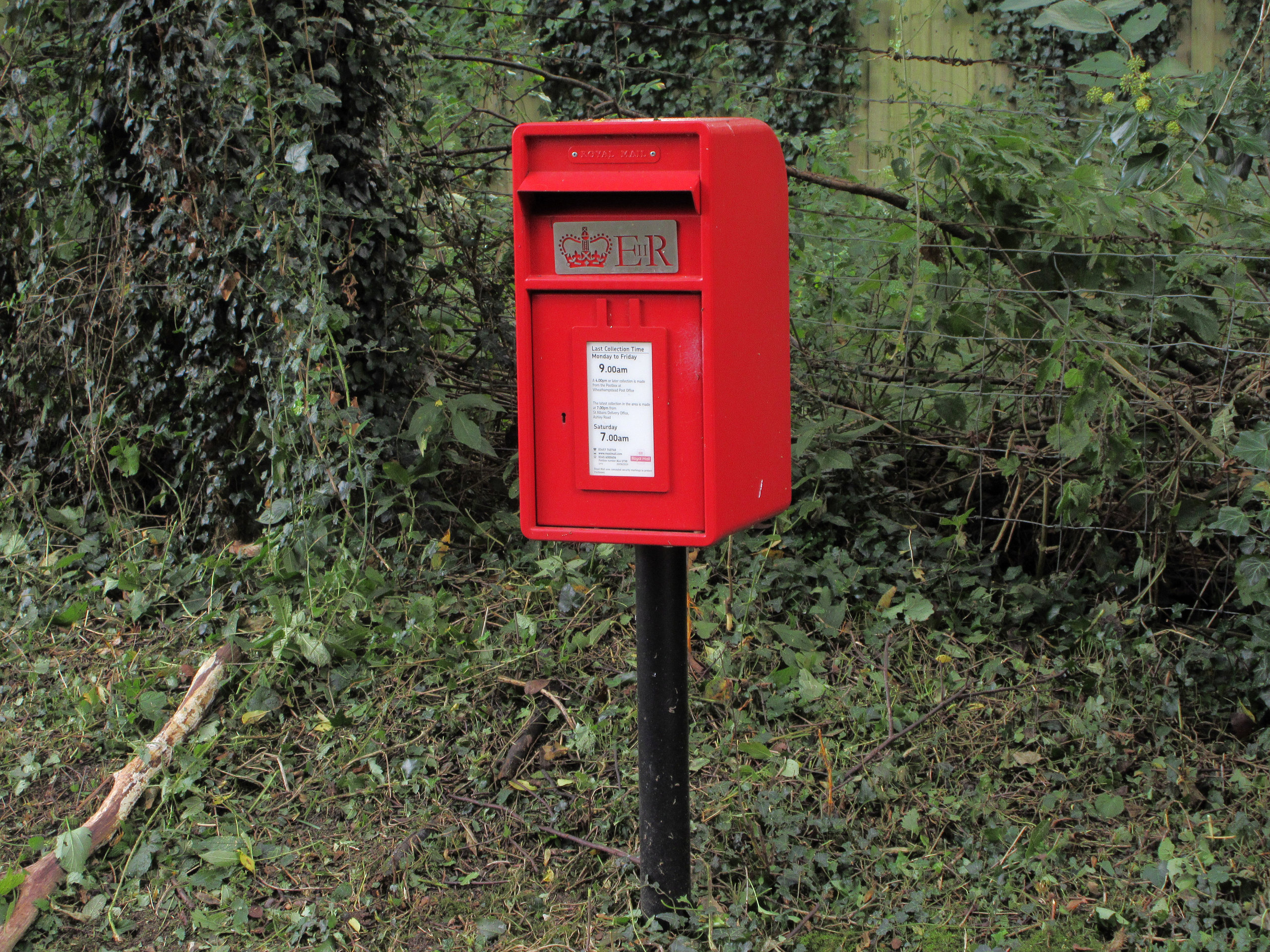
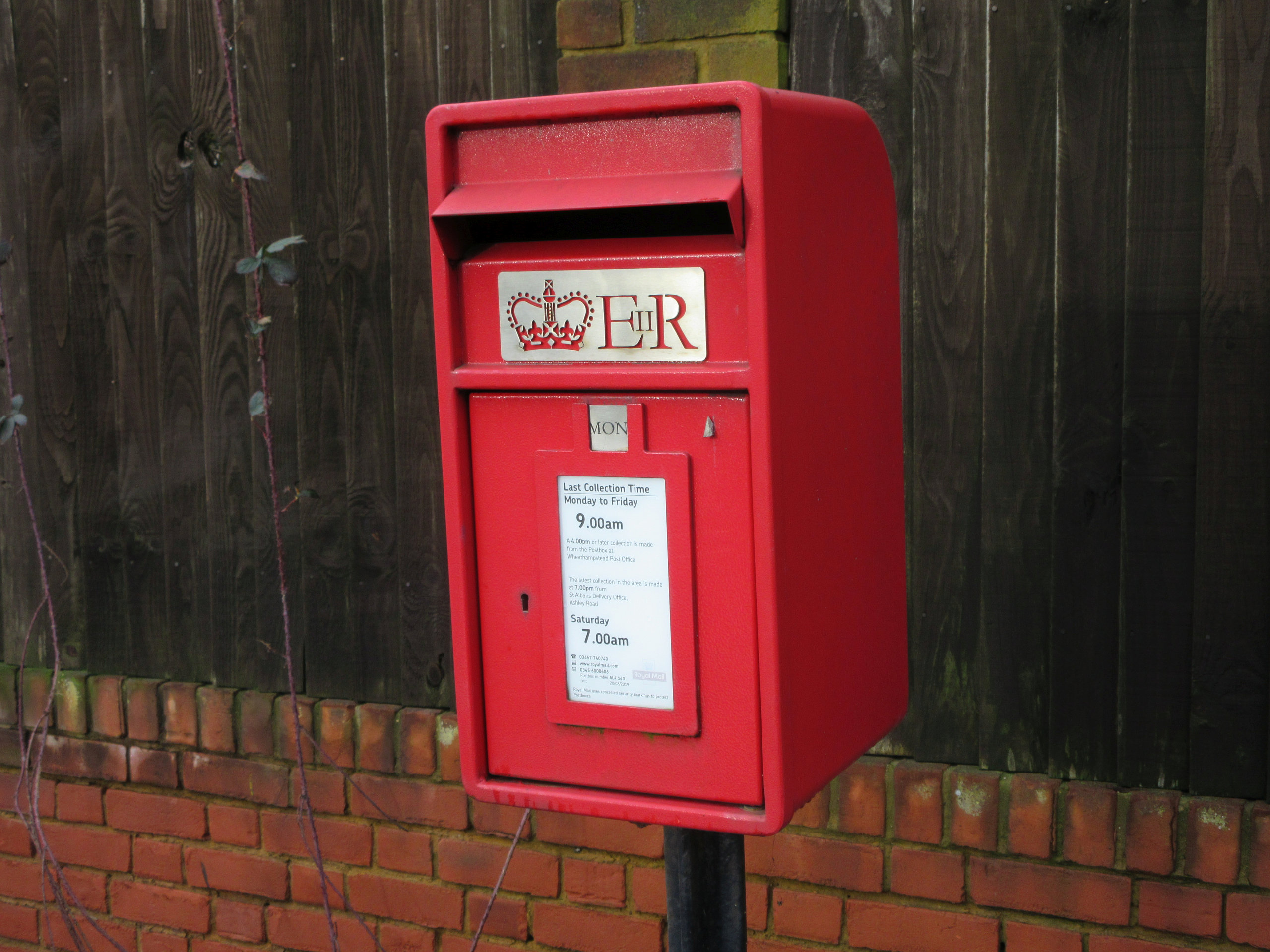
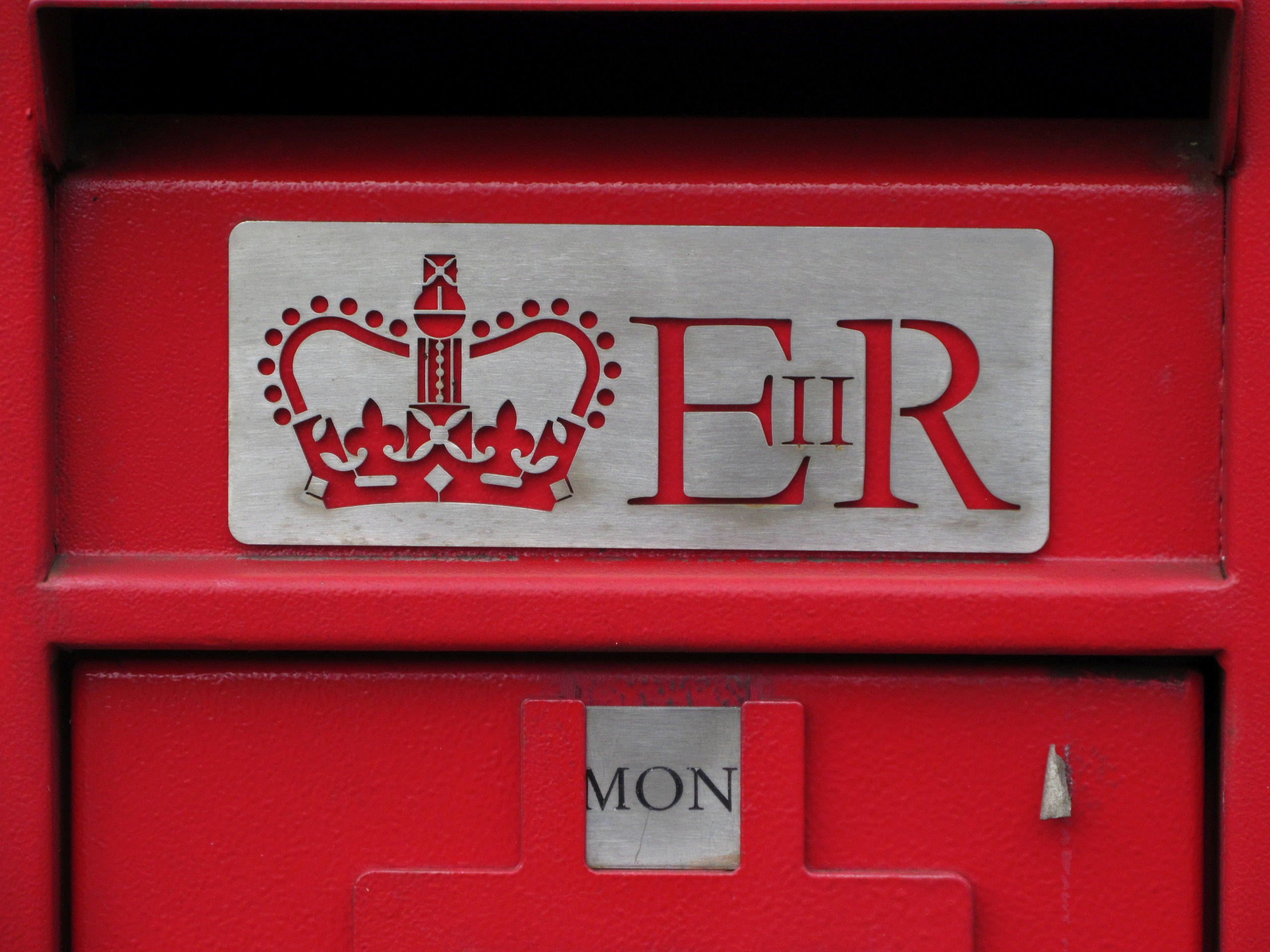
When Royal Mail brought manufacturing in-house, production changed from cast iron to pressed steel while retaining the design of the cast iron lamp boxes. As a consequence, embossed inscriptions as part of the enclosure are no longer viable. The Royal Mail inscription is pressed into a thin metal plate that is riveted on, while the royal cypher appears to be laser cut (from the scorch marks in the metal) into a separate piece of metal that looks to be glued on. On the positive side, the metalwork is far more precise than the rough form of cast iron.