Blaw Knox K1201

Contents
Overview
K1201 was a Blaw Knox contract of uncertain scope that included the design of a series of single-circuit towers. “Blaw Knox K1201” (or simply “K1201”) is used here as a term of convenience for the single-circuit tower suite. These towers are the single-circuit equivalent to Blaw Knox K9857; as the latter is visually identical to SWE PL16, K1201 is considered by some to actually be “PL16” single circuit. The only known single-circuit lines using all K1201 towers are found in the former NoSHEB (North of Scotland Hydro Electric Board) region of Scotland. The towers are also used throughout the UK for single-circuit line alterations.
The drawing schedule also includes material lists and drawings for double-circuit towers, including customisation of the terminal towers A1 and B116 (Grudie Bridge), D1 and E91 (Beauly substation), D212 (Boat of Garten substation) and E1 (Fasnakyle substation). Grudie Bridge power station has a K9857 (“PL16”) double-circuit line, and there is presently no single-circuit at Beauly. Fasnakyle power station is now linked into the Beauly–Denny line at 275 kV (whose 275 kV circuit will be uprated to 400 kV). Boat of Garten connects a double-circuit 132 kV line into a 132/33 kV dual-voltage line.
Some of the original drawings are annotated “North of Scotland Hydro Electric Board 132 kV lines (to specification STL1)”, which ties in with where the lines can be found. Additional drawings exist from the 1960s and 1970s, created for the CEGB; the 1960s ST drawings indicate that K1201 is also a CEB L132 type.
As the term “PL16” is now used incorrectly for various types (on Tiger, Lynx and Zebra conductor) it is not presently possible to use “PL16” as a meaningful collective term for tower types. For now, “PL16” here refers just to the double-circuit towers and associated gantries.
General data
| Designed for | North of Scotland Hydro-Electric Board (NoSHEB) |
|---|---|
| Designer | Blaw Knox, Milliken Brothers division |
| Found | |
| Height (straight line tower) | 74′–3″ (22.6 m) |
| Voltage | 132 kV |
| Dates back to | 1947–50 (drawings) |
| Conductors | Single |
| Circuit count | Single |
| Design conductor | 0.175□″ SCA (175 mm² Lynx ACSR) |
Can be confused with
- CE PL3 single circuit
Lines
Known lines include:
- Quoich switching station to Quoich power station, Scotland: K1201 single circuit double earthwire
- “Invergarry–Stornoway” (which is several 132 and 33 kV lines) is K1201 single circuit from Invergarry power station to Quoich switching station. There is a break in line however, with both sides leading to Fort Augustus substation; one side is single circuit on poles, the other on PL16 double circuit.
- Shin power station to Cassley substation; the portion from Shin to Lairg has since been undergrounded.
- Short spur lines to Aigas and Kilmorack power stations; these lines tee off from the line from Beauly substation to Deanie power station.
- A line that serves Beinneun, Beinneun wind farm and Ceannacroc substations
- Killin substation to Finlarig power station
- The spur to Nant power station (the start of the line is K1420)
All of the lines above are in Scotland. There are no known K1201 lines outside of Scotland.
A short section of the 110 kV line between Strabane 110 kV substation (in Ballymagorry) and Omagh 110 kV substation in Northern Ireland uses K1201 angle towers, across the Strule River outside Newtownstewart. The remainder of the line is wood pole with lattice angles. Reduced-height K1201 towers are also used for the double diamond crossing outside of Sundon substation in England.
A number of K1201 line towers can be found within lines PE (Lea Marston substation to Elmdon substation) and PHW (Elmdon substation to Solihull), along the east edge of Birmingham. PE and PHW are single-circuit CE PL1 lines with K1201 and L4(m) towers resulting from route alterations.
A K1201 SST (not fully confirmed) was chosen for Husthwaite substation as the eastern termination of T(11) CEA – L213 Husthwaite–Wormald Green, constructed with single-circuit double-earthwire “PB” twin masts. This line has since been upgraded to double circuit with no earthwire; four phases terminate on the earthwire crossarm of the SST and the remaining two phases terminate on custom crossarms. The tower’s apparent original form was once shown on the EDS Consultancy website, although too small to make any determination except that it was a heavy angle or terminal K1201 double earthwire tower.
Former lines include:
- Beauly to Mossford, twin K1201 lines replaced with L7(c) double circuit
Tower forms
The following diagrams are shown to scale at 12 pixels per metre.
The S90 diagram is a Google Street View–derived depiction of the 90° angle tower at Taunton substation, added when the substation was constructed around the 1950s. This is tower E43, listed as a “North Of Scotland Hydro Electric Board type tower”, effectively confirming that it’s K1201 (not SWE PL9 as previously used when diverting the line during wartime).
Strengthened towers:
A strengthened S2 can be seen alongside the A887 east of the Beinneun wind farm substation. There appears to also be a strengthened SS2 closer to the substation.
Examples


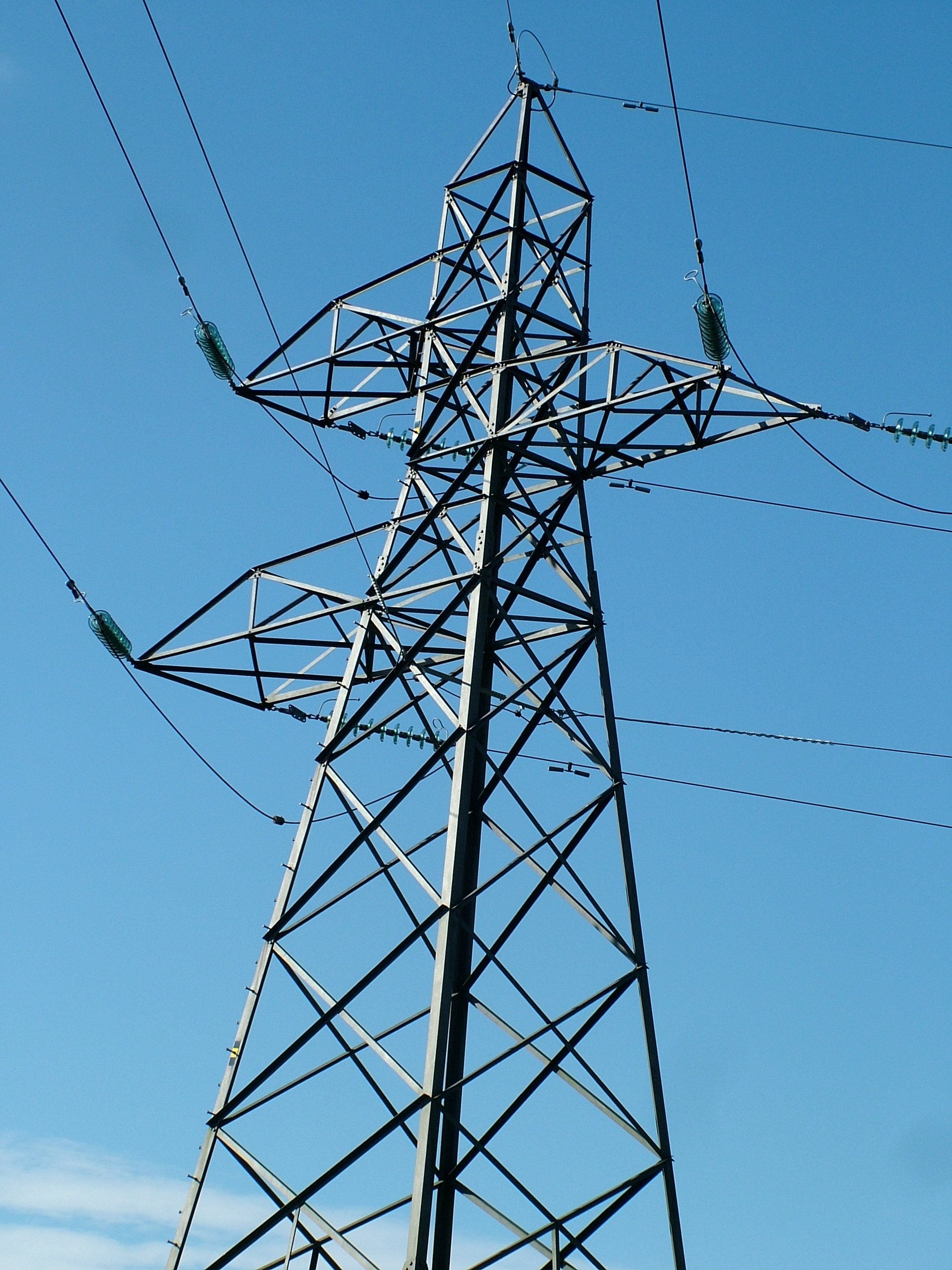

Tower views
S90
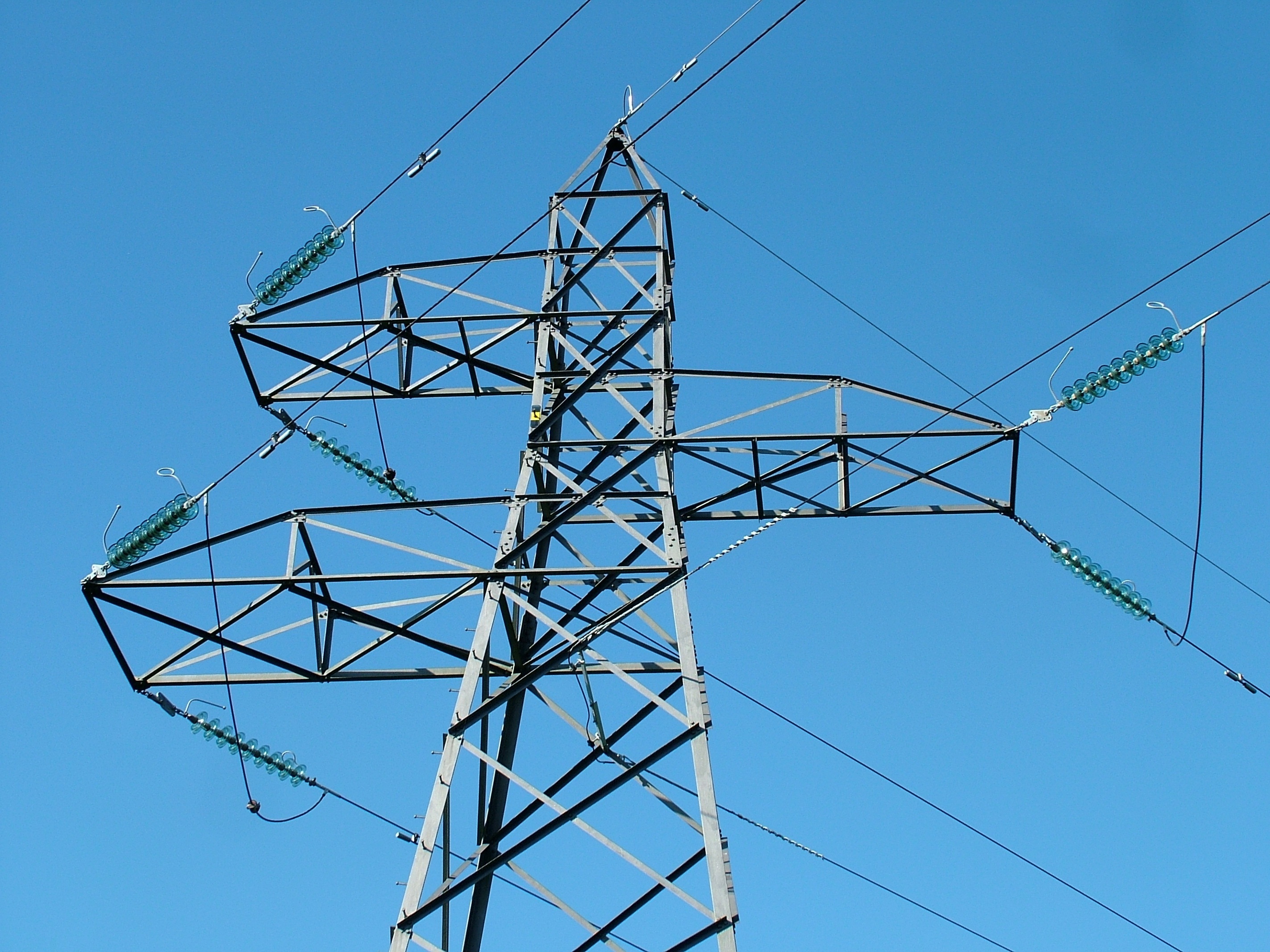
Note the pilot wire in the photo above, unusual on 132 kV.
Tower details
See dimensions on the site guide page for a key to the tables.
| Type | Source | Height | Base width | Crossarm width |
|---|---|---|---|---|
| Blaw Knox K1201 S2 | BK35/25804 | 74′–3″ (22.6 m) | 12′–0″ (3.7 m) | 25′–6″ (7.8 m) |
| Blaw Knox K1201 SS2 | K1201-65 | 78′–9″ (24.0 m) | 12′–0″ (3.7 m) | 34′–0″ (10.4 m) |
| Blaw Knox K1201 S10 | XM2051-28A | 72′–3″ (22.0 m) | 15′–5″ (4.7 m) | 12′–9″ (6.5 m) |
| Blaw Knox K1201 SS10 | XM2051-1G | ? | 15′–5″ (4.7 m) | ? |
| Blaw Knox K1201 S30 | K1201-11C | 72′–3″ (22.0 m) | 18′–0″ (5.5 m) | 24′–9″ (7.5 m) |
| Blaw Knox K1201 SS30 | XM2051-82 | 76′–9″ (23.4 m) | 18′–0⅛″ (5.5 m) | 33′–6″ (10.2 m) |
| Blaw Knox K1201 S60 | K1201-12 | 72′–3″ (22.0 m) | 20′–0″ (6.1 m) | 28′–3″ (8.6 m) |
| Blaw Knox K1201 SS60 | XM2051-1G | ? | 20′–0″ (6.1 m) | ? |
| Blaw Knox K1201 S90 | XM2051-1G | ? | 20′–0″ (6.1 m) | ? |
| Blaw Knox K1201 SS90 | XM2051-1G | ? | 20′–0″ (6.1 m) | ? |
| Blaw Knox K1201 ST | BK35/25996 | 72′–3″ (22.0 m) | 20′–0″ (6.1 m) | 29′–0″ (8.8 m) |
| Blaw Knox K1201 SST | XM2051-83A | 77′–3″ (23.5 m) | 20′–0″ (6.1 m) | 42′–6″ (13.0 m) |
| Tower type | Peak/double earthwire to top crossarm | Top to bottom crossarm | Bottom crossarm to ground |
|---|---|---|---|
| Suspension | 5′–3″ | 13′–0″ | 56′–0″ |
| Tension | 11′–0″ | 12′–0″ | 49′–3″ |
Phase clearances do not take into account the length of the suspension insulator strings or earthwire suspension shackle length (hence crossarm-to-crossarm only) and are for comparison within class only.
Chalton
At Chalton in Bedfordshire, the Sundon–Aylesbury East 132 kV line (route PU) forms a diamond crossing (51.931° N 0.508° W) under two 400 kV lines at once: Sundon–East Claydon (route 4YJ, L6 triple conductor) and Sundon–Elstree (route ZA, L2 twin conductor). The diamond crossing starts and ends on DD10 earthwire changeover towers, and miniature S30 towers are used as the crossunder towers. The the mini S30s look to be the same size as the special S60 in the enhanced tower bible, making them 51′–8″ (15.7 m) rather than the standard height of 72′–3″ (22 m). Within the diamond crossing is an L6 D60 and an L2 D60.
There is a public footpath that passes right underneath the crossing. The photographs were taken on 23/09/2023.


See also
- PL16 D60 and K1201 S2, England (Flickr)
- K1201 ST, Hall i' th' Wood railway station, England (Wikipedia)
