UK rolling stock
Contents
- Rides
- Observed
- Abbreviations
Rides
Rolling stock types experienced first-hand. Not all photographs are from the trains travelled on, but most are.
Siemens Desiro City
Classes 700 and 717
The infamous “ironing board” trains, as amusingly illustrated in How electric trains work and why they make interesting sounds. I find the seats perfectly comfortable but the ride quality is very variable. One ride will be fairly smooth, and another will be very juddery. It’s difficult to determine whether the sub-par ride quality is down to the track, the seats or the suspension, or a combination of these.
The Thameslink interiors are a bit sterile but they’re nice trains. They don’t have the “old school” “proper train” vibe of the 150 or 350 but they’re good nonetheless. The passenger information system is excellent (the odd bug or dead LCD panel aside), although it would have been nice if the narrow and wide LCD panels used the same display technology, as they don’t have the same colour output! The 2+2 seating and wide aisles gives these units a spacious feel.
Passengers preferring a quiet ride won’t appreciate the level of noise from the traction motors and electronics, and the roof-mounted vacuum circuit breaker—that operates automatically when entering and leaving neutral sections—can be startlingly loud.

Bombardier Electrostar
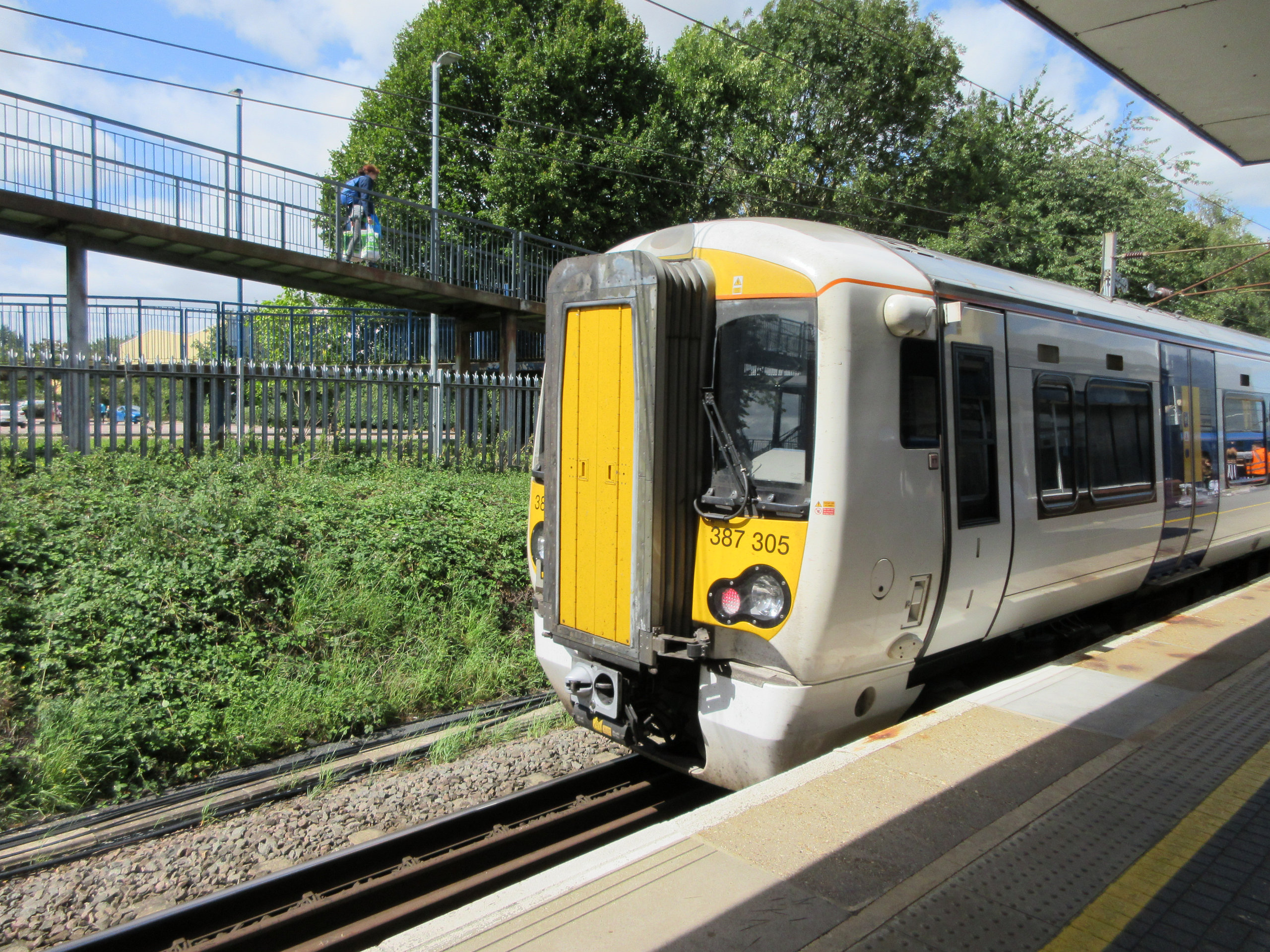
Class 387
I still remember my first ride on a class 377 Electrostar: the train pulled away so smoothly that I didn’t realise we were moving until I looked out of the window. This was quite an improvement over the class 319’s jerky acceleration. In general, though, they’re “so-so” units, not especially noteworthy. On the GWML however (rattly interior doors notwithstanding) the ride quality is at least better than that of the IETs, although it’s not up there with the class 350, even on units with softer seats.




Siemens Desiro UK
Class 350
These have to be my favourite unit, specifically those with the green moquette. The seats are comfortable, the ride quality is very good and the green interiors are colourful and cheery. No matter where you sit, the traction electronics and motors seem very quiet, suggesting that you can indeed achieve a quiet passenger saloon, something the IETs sorely lack. This isn’t quite true, as it happens: the traction sound is in fact drowned out by the noise of the air conditioning. When you traverse a neutral section, the air conditioning shuts off, leaving a deafening silence. At this point, the traction sound is much more evident; since the motors are shut off during neutral sections, it may just be the reduction gearboxes that you can hear.
The seemingly air-operated plug doors are a bit sluggish.
On at least one occasion a class 350 unit has exhibited noticeable hunting oscillation, possibly due to wear as this is far from normal for these trains.
Ride quality is above average. Nothing makes up for track irregularity, but you don’t have the judder that you get with class 700 units.


Class 360
The EMR (East Midlands Railway) class 360s felt like the most dismal trains I’ve ever ridden. The grey moquette interiors are dark and dingy. While otherwise the same design as the 350, they just felt inferior.
Bombardier Voyager
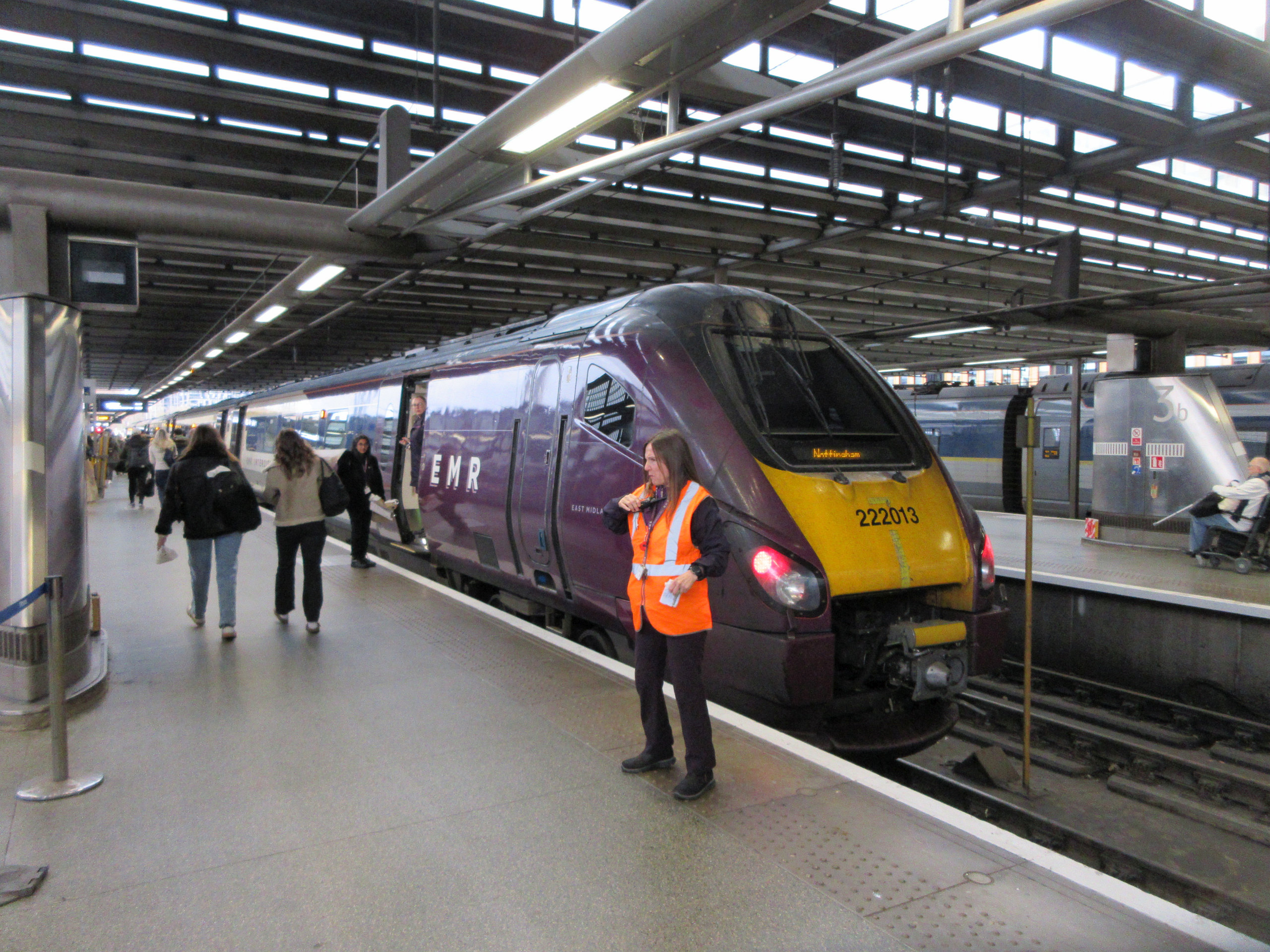
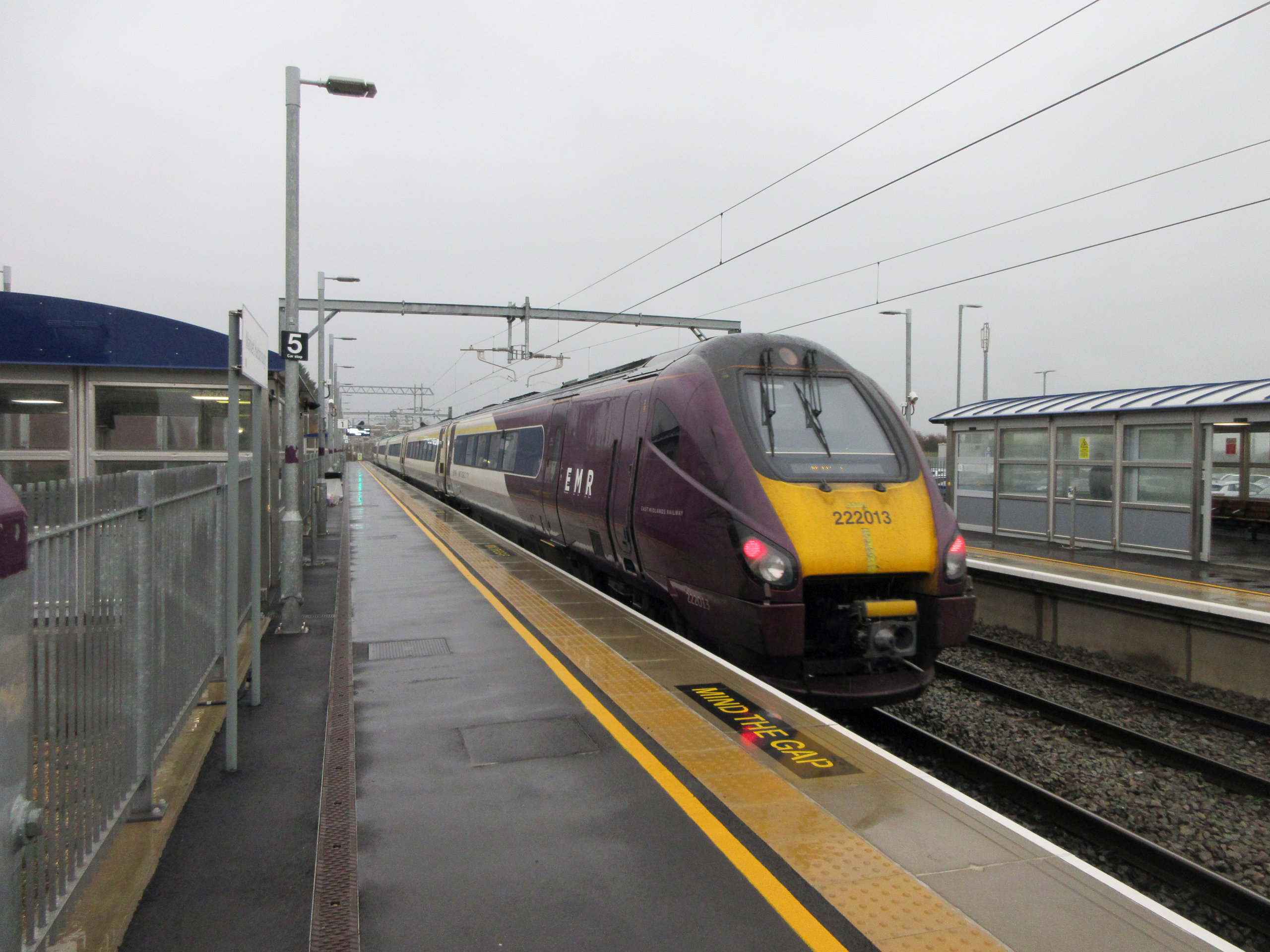
Class 222 Meridian
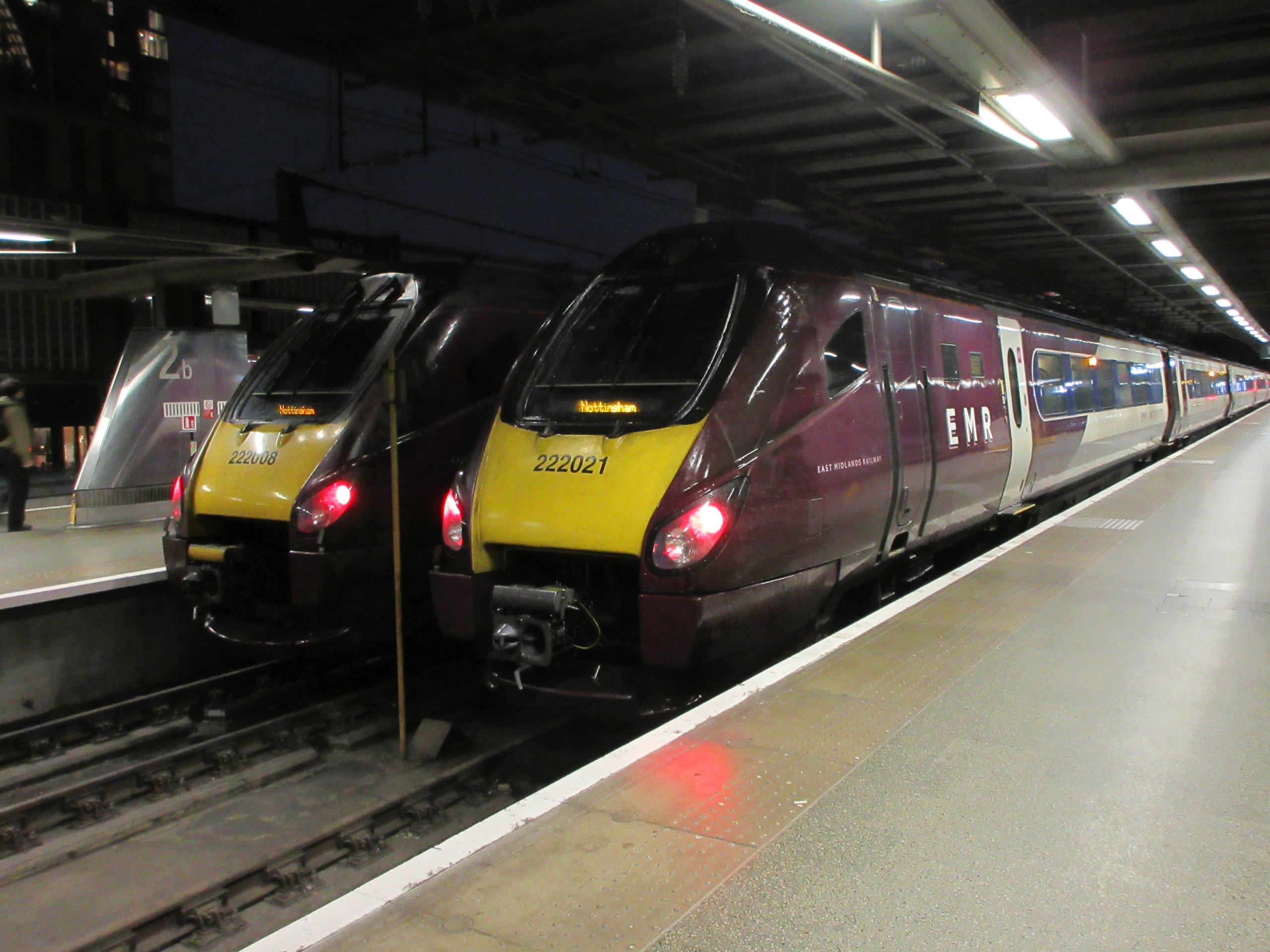
I’ve watched class 222 units pass by for years. Having displayed 222104 as my desktop background at work for several years, I found myself with an obligation to experience these trains first-hand to see if they hold up to scrutiny. Midland Mainline’s class 222 staff training programme made them out to be quite sophisticated units, after all. With EMR having already started to phase them out in favour of the class 810, the class 222 day out ended up being the tail end of the autumn 2025 instead of late spring or summer, to avoid booking a journey only to end up on an Aurora instead.
The outbound journey was on 222013 and the return journey was on 222021. In both instances, the ride was very stable, but this was (rather uncharacteristically) also true of both of the class 700 journeys on the same day, as though the track had been re-tamped. Traversal of pointwork at junctions was excellent, something that causes other types to lurch.
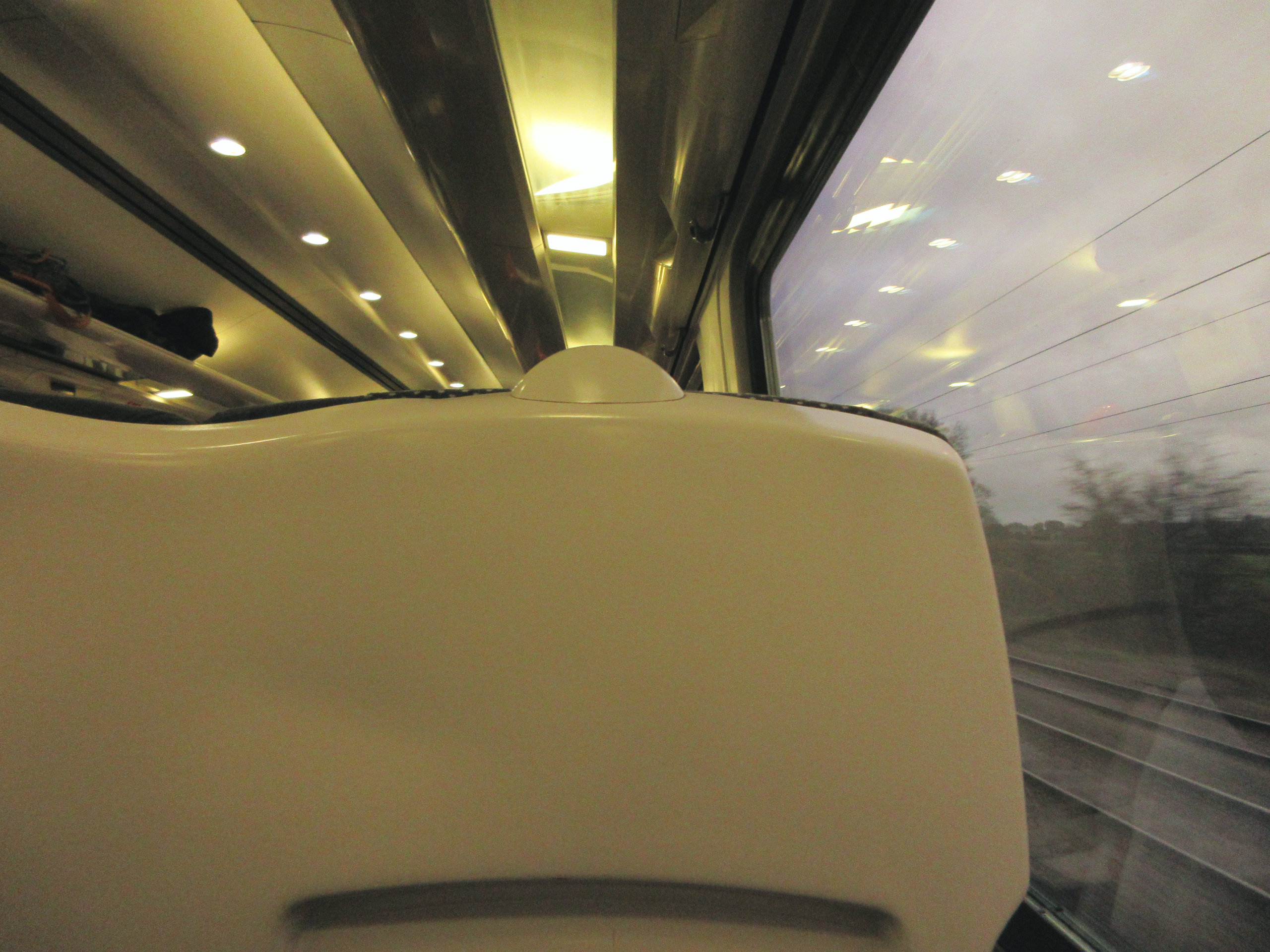
As expected from watching trains pass by at night, the class 222 is much cosier inside than the class 700’s sterile interior, with what looks like 2700 K colour temperature instead of the class 700’s circa 4000 K lighting. Seat legroom seemed fine, but aisle width is a bit limited when alighting from a window seat! Each pair of seats is a single assembly, which affords more privacy between rows, unlike other clases where you can see in between the pairs of seats. The seats seemed to be as hard as those of a class 700, which will pose the same problems for passengers as the “ironing board” trains.
The suggestion that class 222s are inadequately soundproofed seems a little unfair, as the diesel engine noise is quiet and unobtrusive. The class 700 on the return journey however was much quieter, although this depends on where you are seated as traction noise on the class 700 can be quite loud; there was no audible motor or gearbox noise on the class 222, just the sound of the diesel engine. The 222 does still experience engine vibration, which is not ideal, but is tolerable. Compared to a typical bus, the experience is significantly better, but it’s not at the same level as a Hitachi bi-mode or CAF DMU.
The real problem for me with the class 222 is boarding and alighting. The doorway step is very shallow front-to-back, bordering on hazardous for anyone with larger feet; combined with the considerable floor height (which may be required to make room for the underfloor traction), boarding and alighting is not a pleasant experience. It’s like going back to the days of the Mercedes-Benz T-2 811D/Plaxton Beaver buses, before the far superior step-free Optare Solo was introduced. The exterior doors are within the vestibules, as seems to be typical for high-speed carriages. While this doesn’t pose a problem for GWR IETs, it’s troublesome for the 222 as the vestibule doors close prematurely, blocking you from entering or leaving the saloon; the doors can even close against you with considerable force.
That aside, they’re nice units. The Midland Main Line already lost the HSTs, and soon the sound of diesel passenger transport will be gone from the line forever.


Bombardier/Alstom Aventra
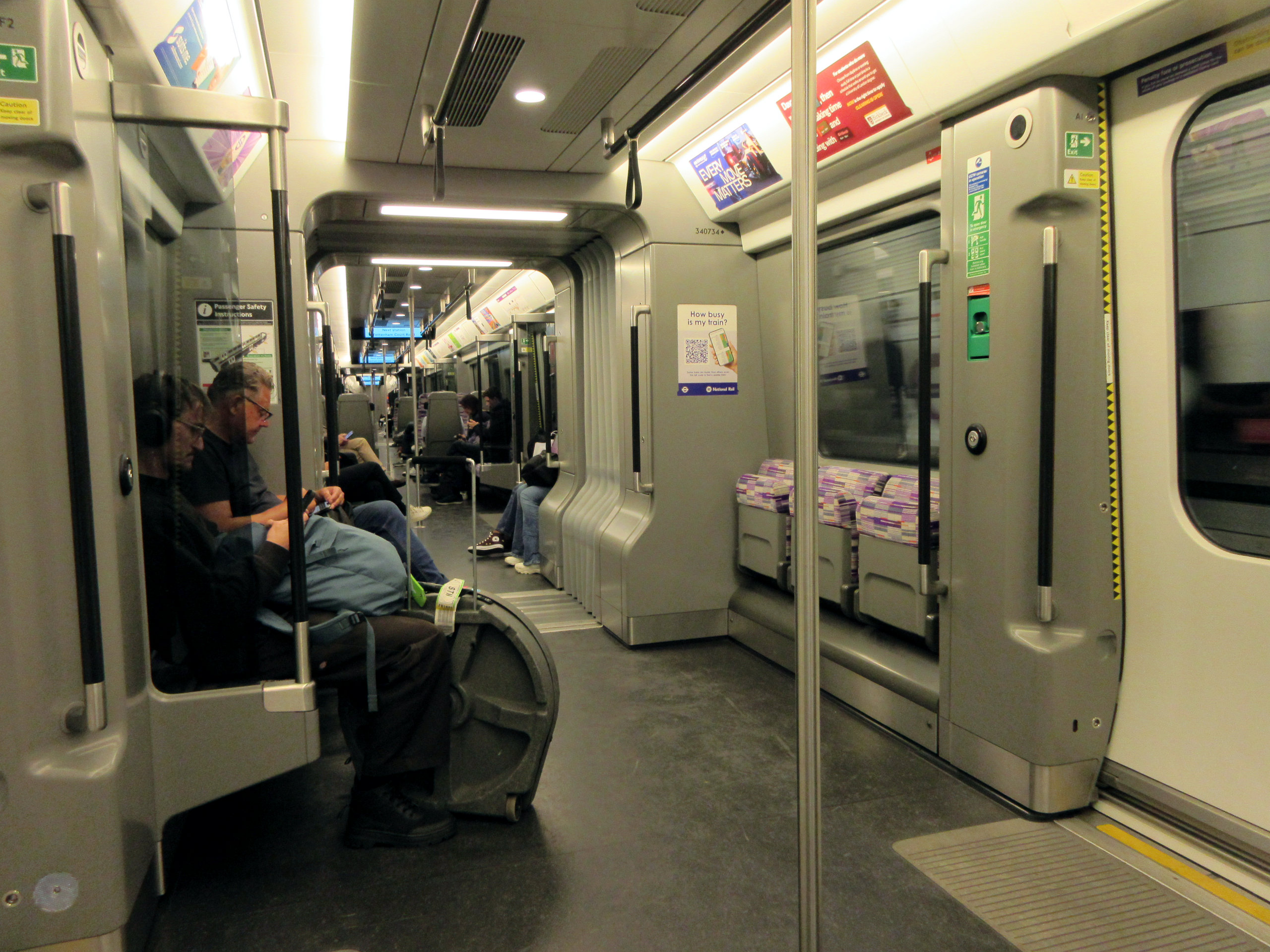
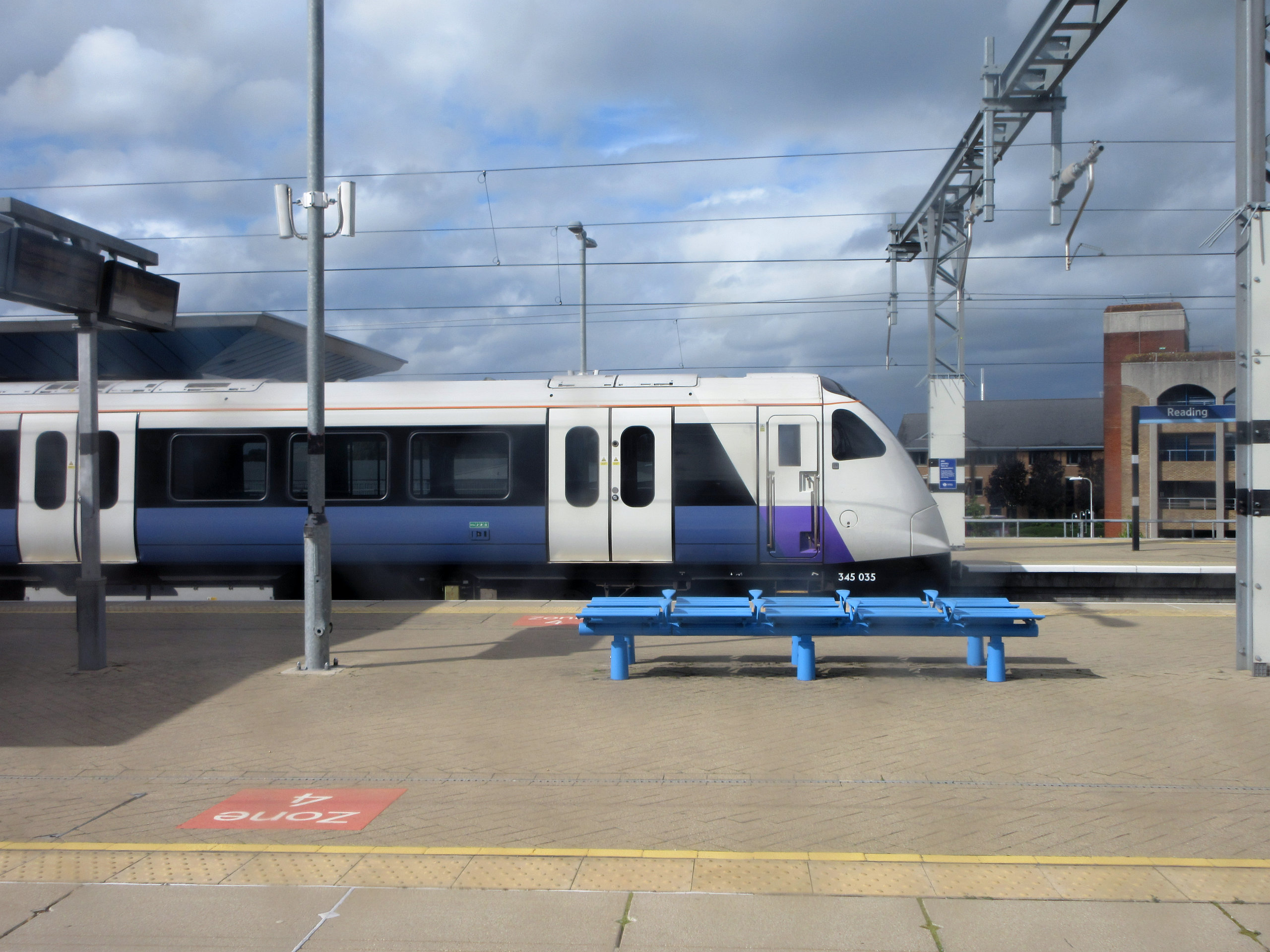
One of the more noticeable traits of the Class 345 is the very noisy door mechanisms! The ride quality is fairly average, though.
Class 345
For a recently-constructed line, the Elizabeth Line is fairly rough!
Class 730
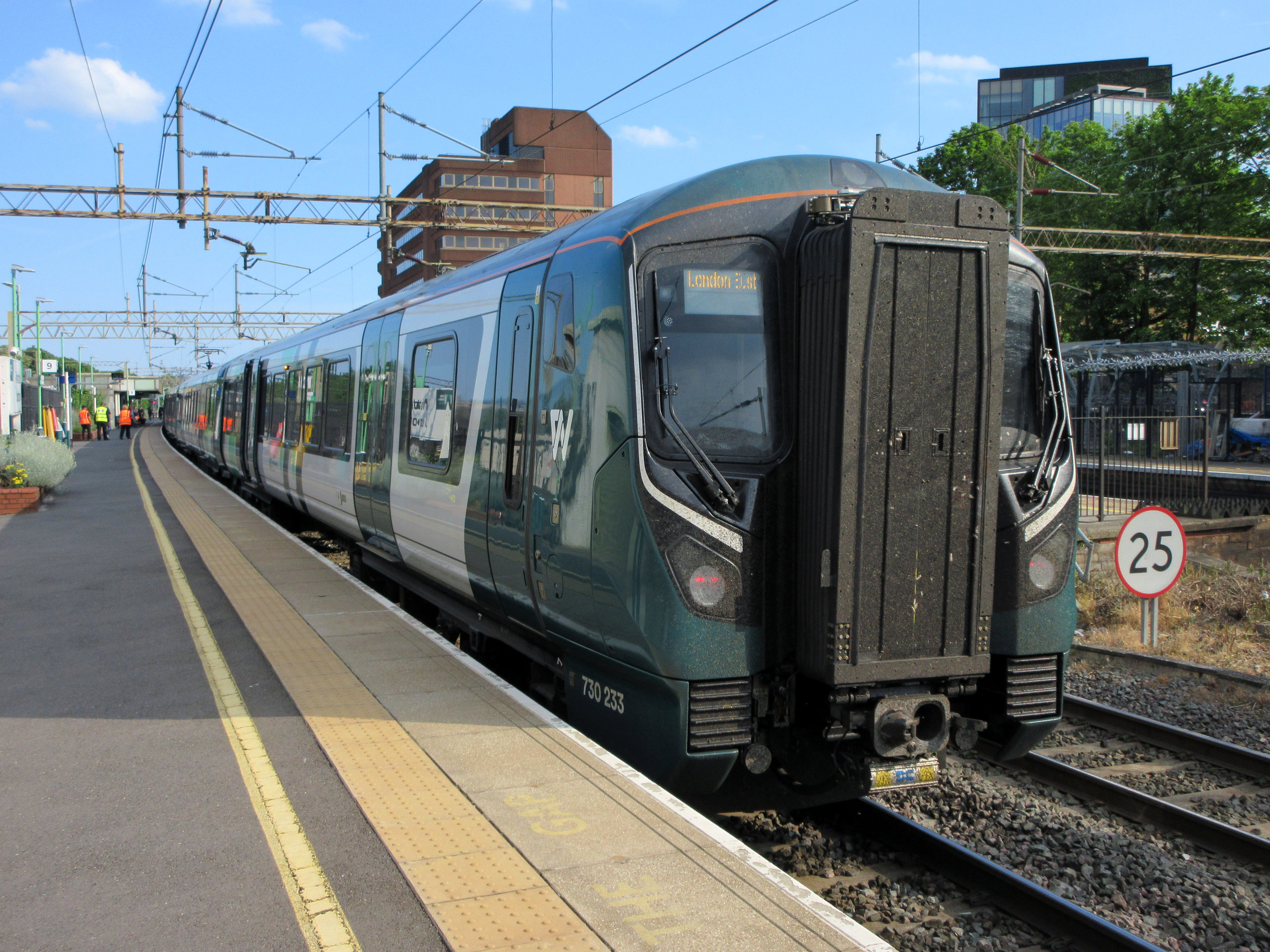
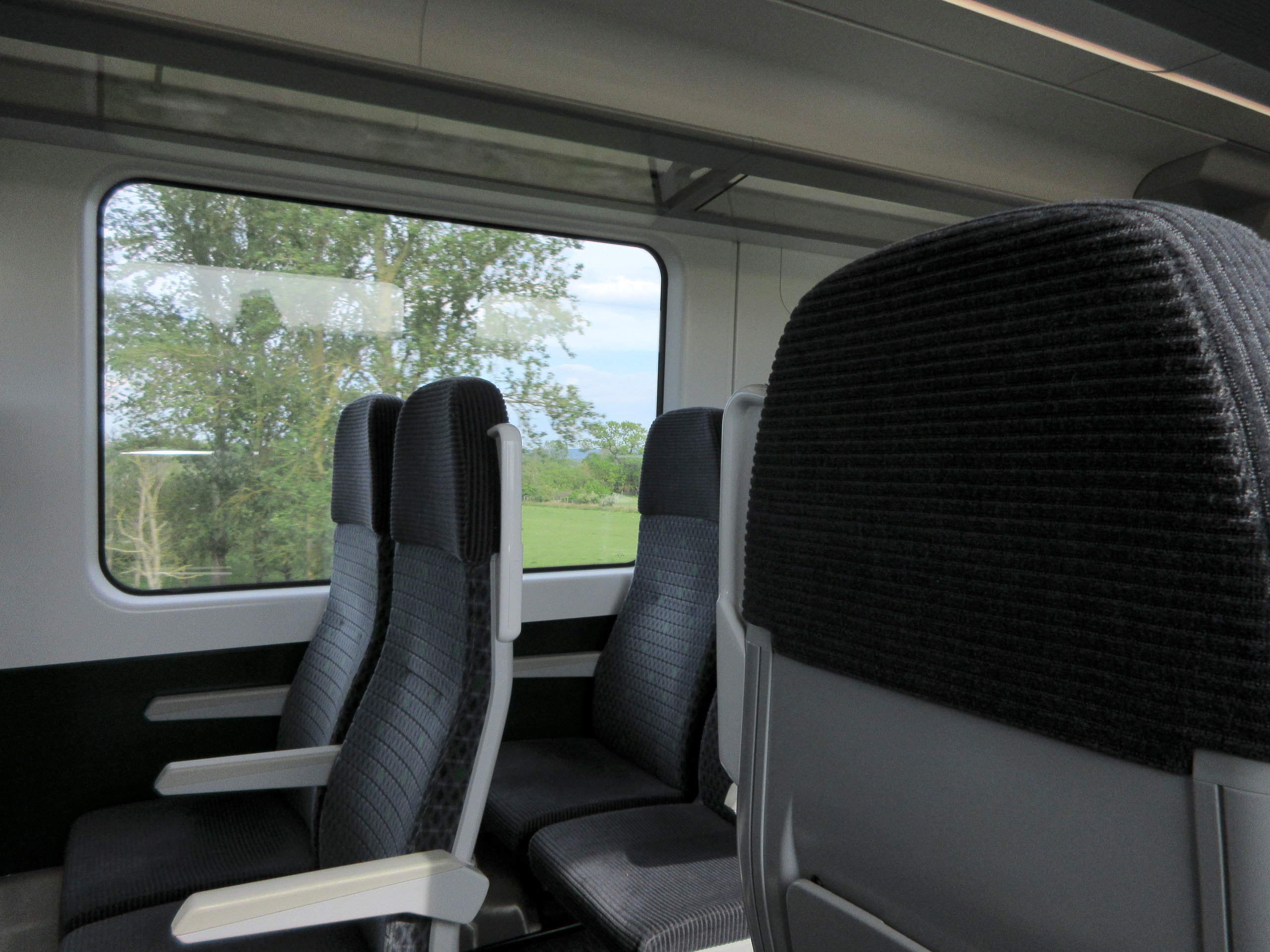
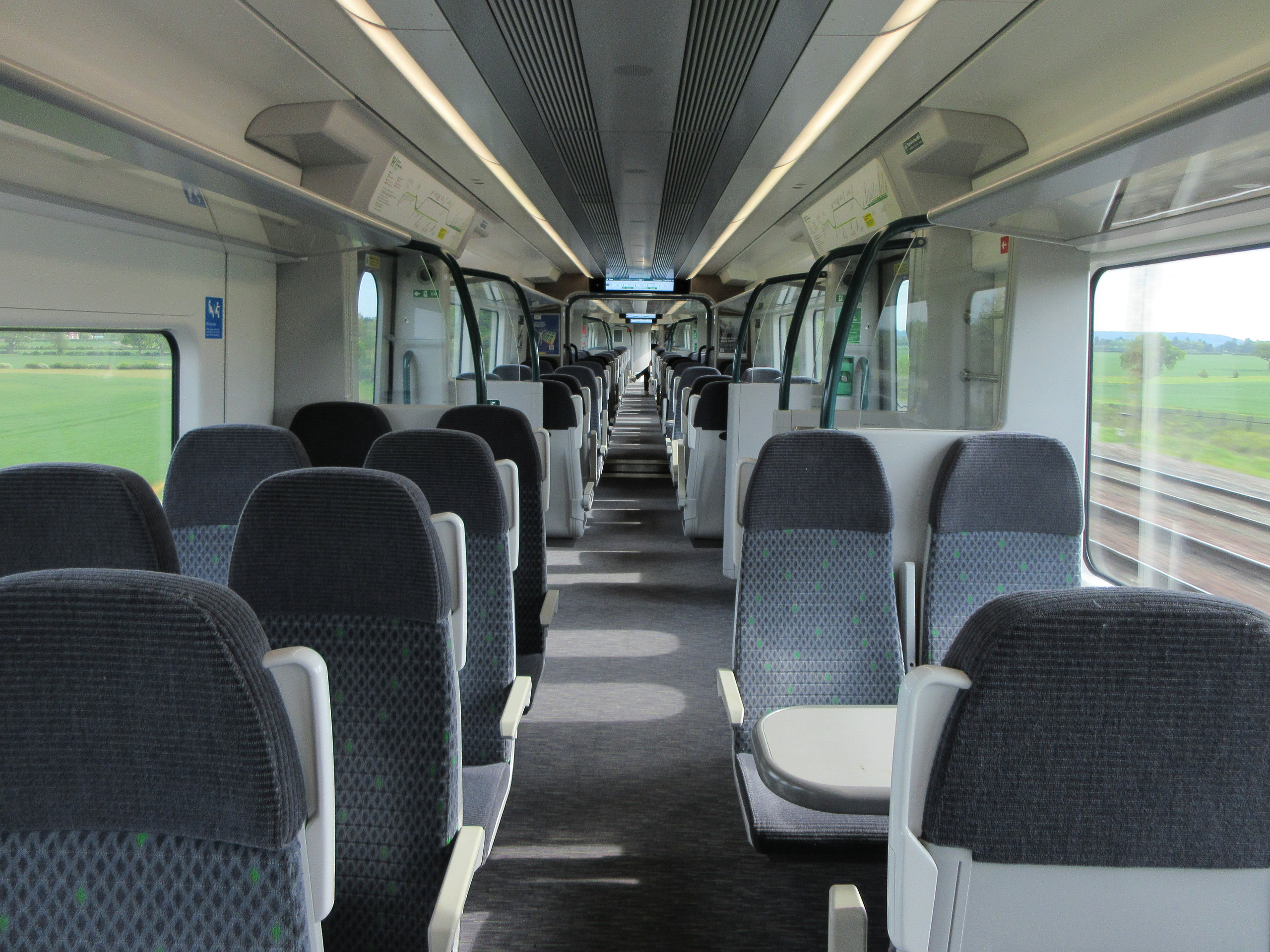
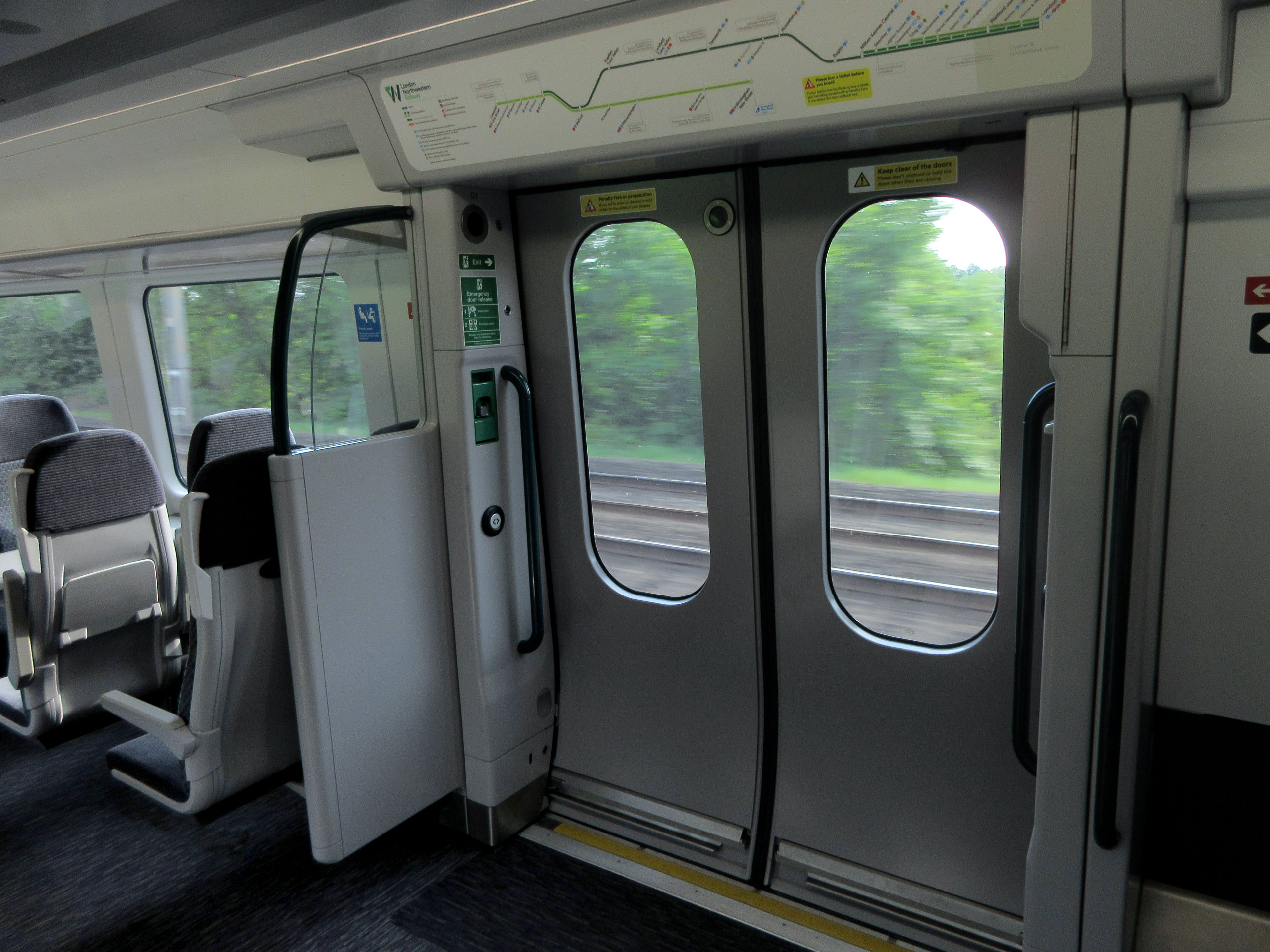
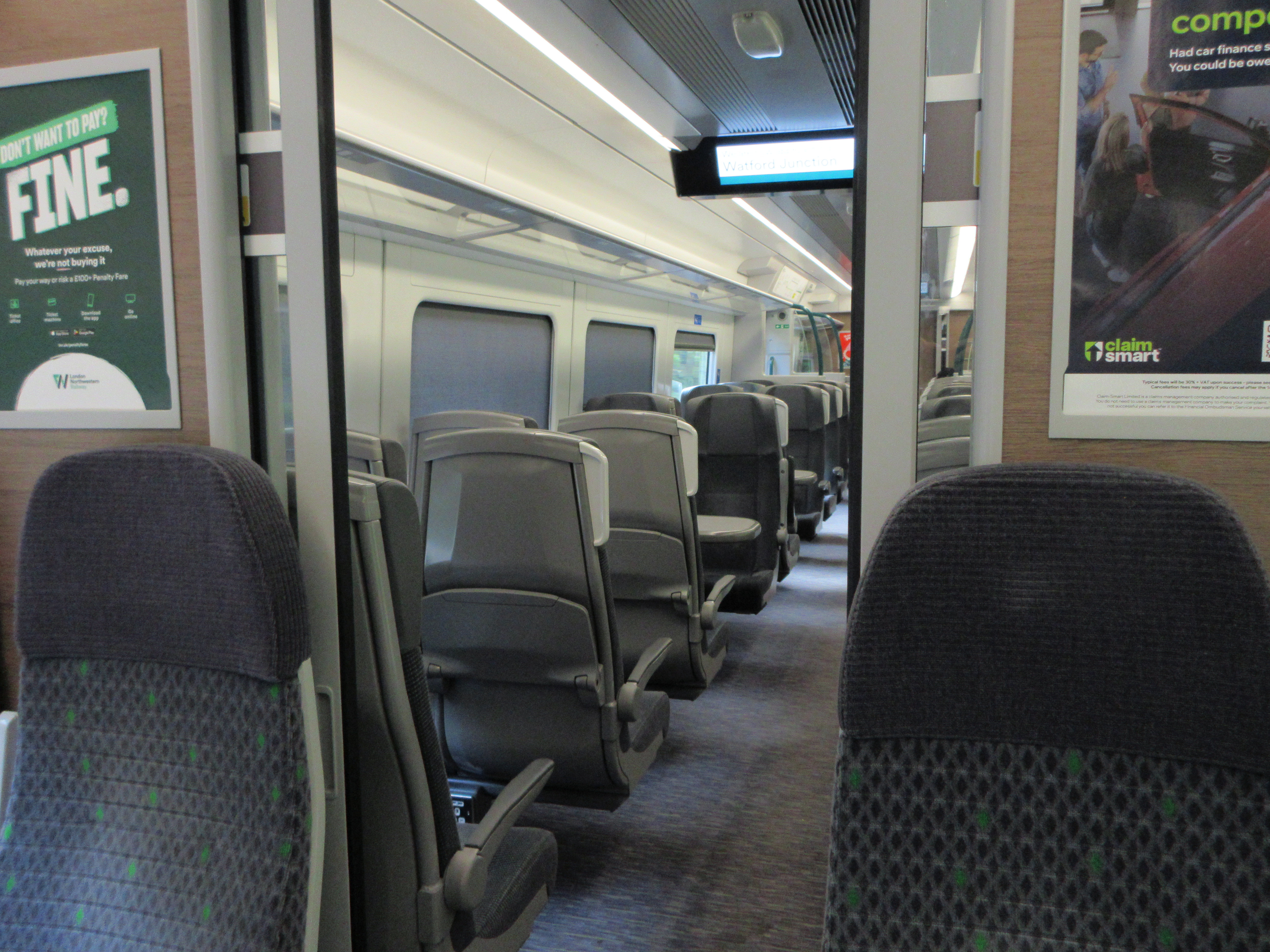
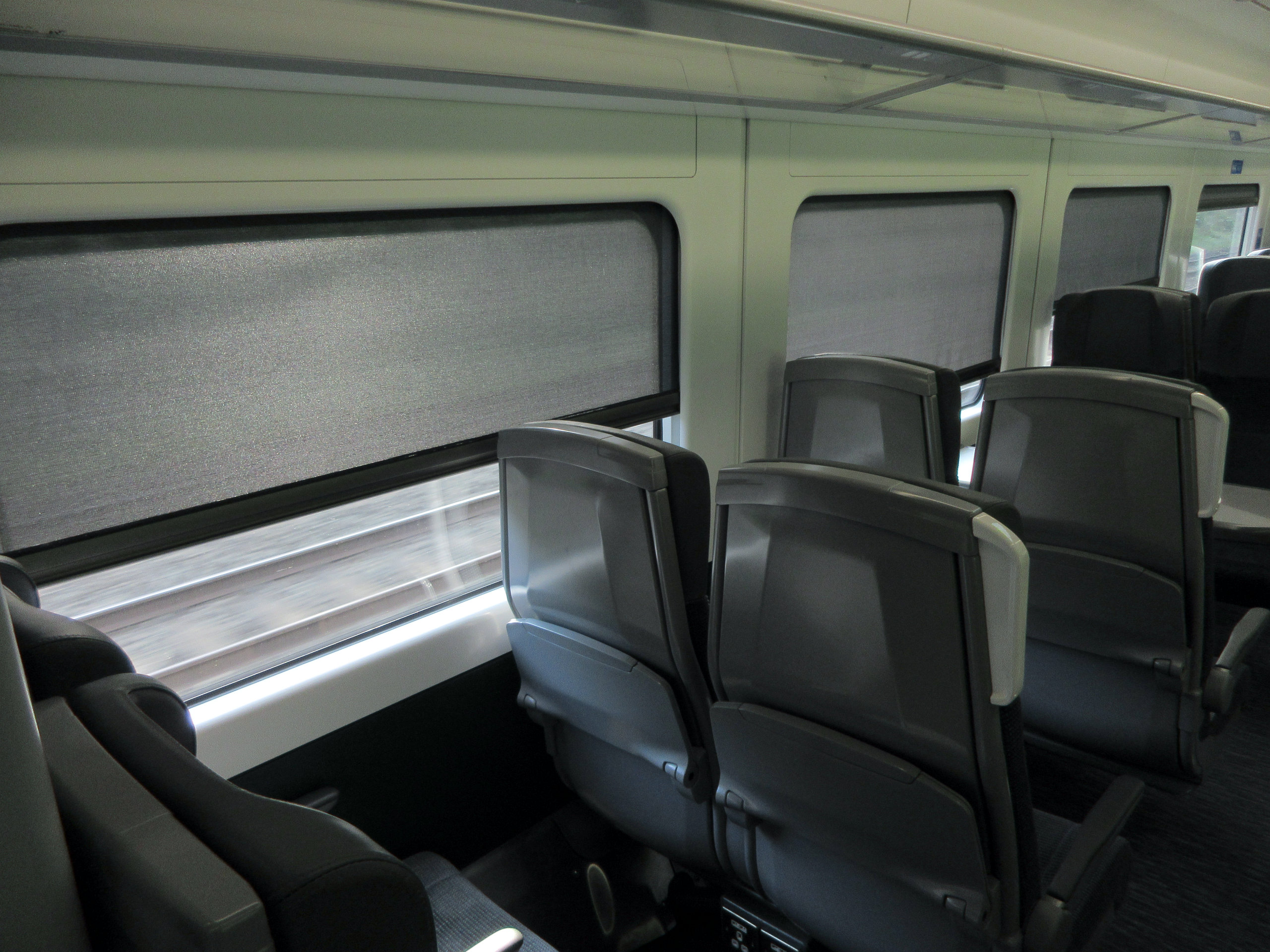
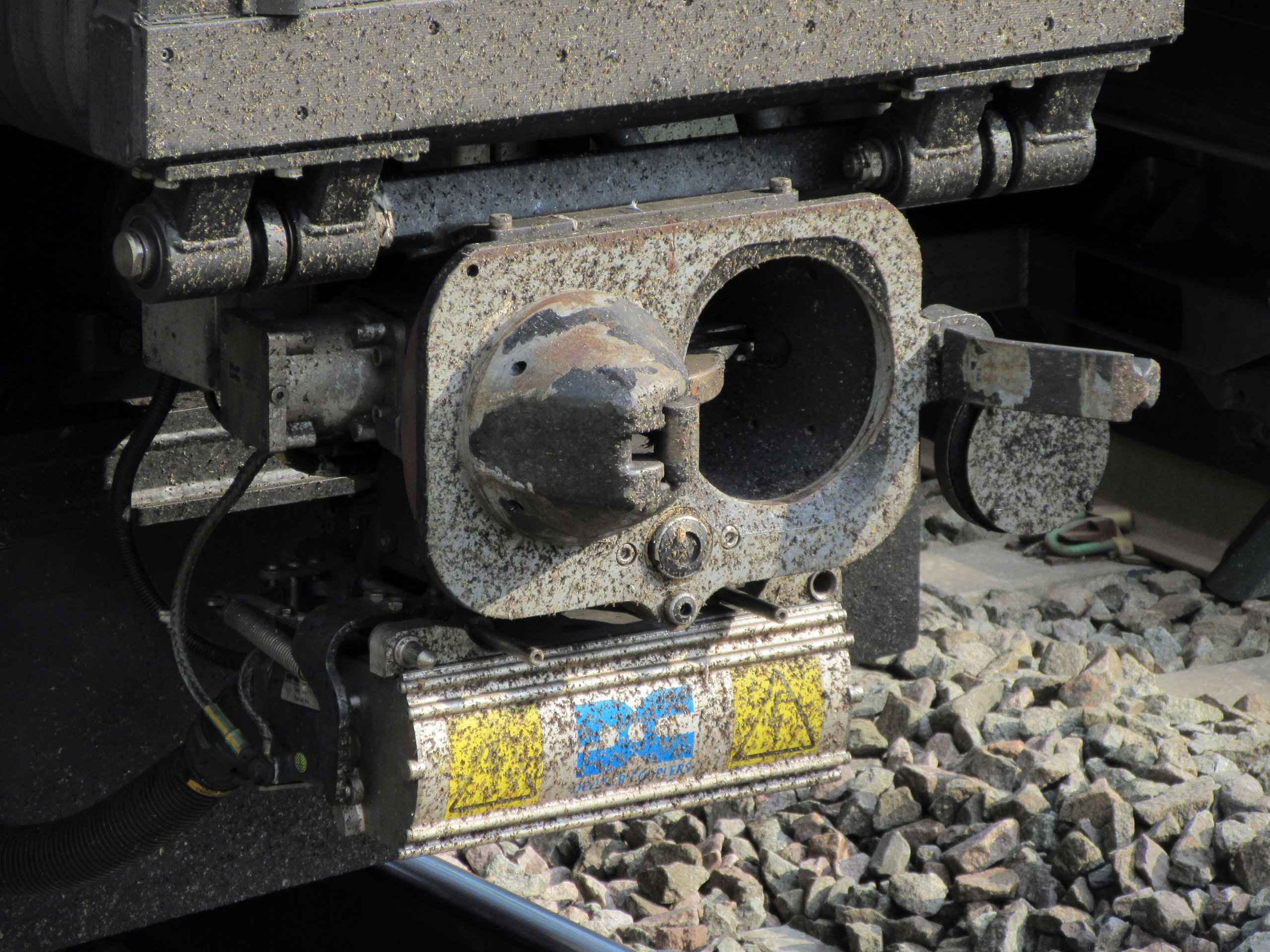
Ride quality on the class 730 seems to be, like its Siemens rival, fairly variable. The first class 730 ride was OK; the seats are the typical firm type now widely used. However, the next journey was much rougher, just like a bad class 700 journey, only with the added irritation of a persistent vibration rattle from an unknown source. Even the unoccupied seats could be seen to vibrate. The return journey was better but the rattle was still there. London Northwestern have retained the drab grey decor, when they should have returned to the London Midland green.
The driving motor car had first class–style seats (without antimacassars) and window blinds, yet still 2+2 seating with no First Class indications. Thameslink first class is 2+1 seating, after all. (All the seating appears to be 2+2, rather than the 3+2 as used by Greater Anglia.)
Traction noise is also more apparent in the class 730 than with the class 350, perhaps due to quieter air conditioning.
BREL Mark 3–based EMUs
Class 455
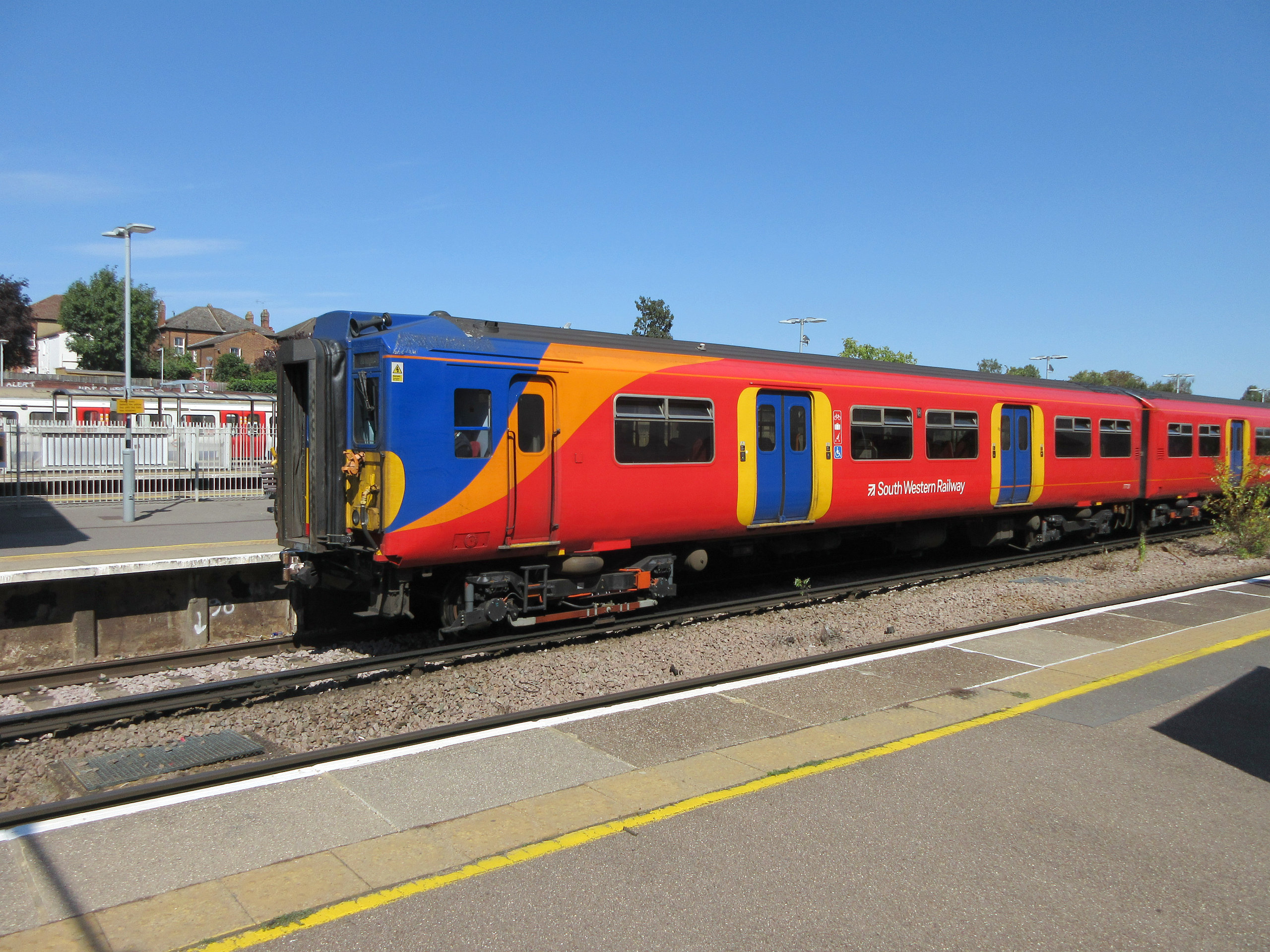
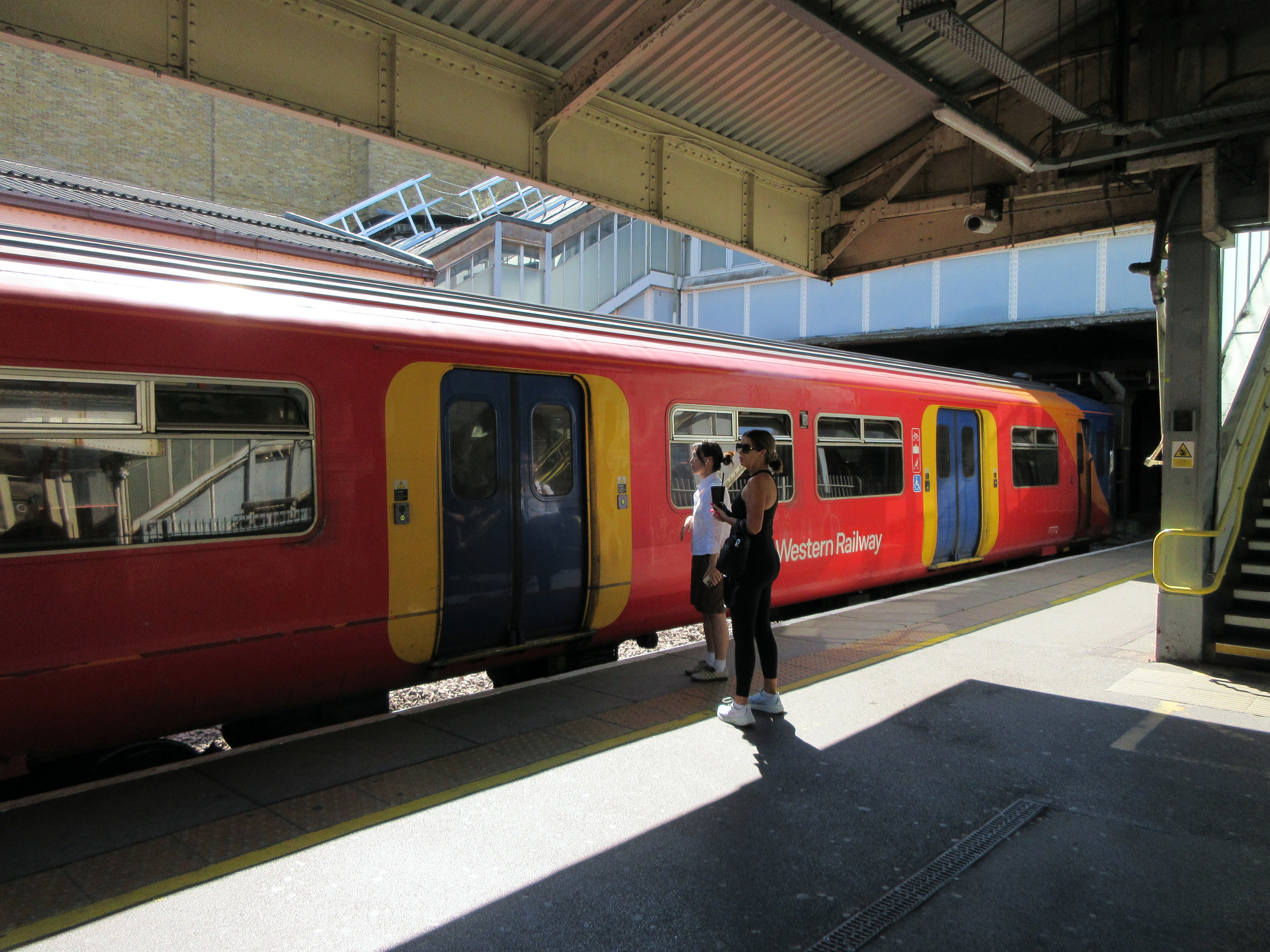
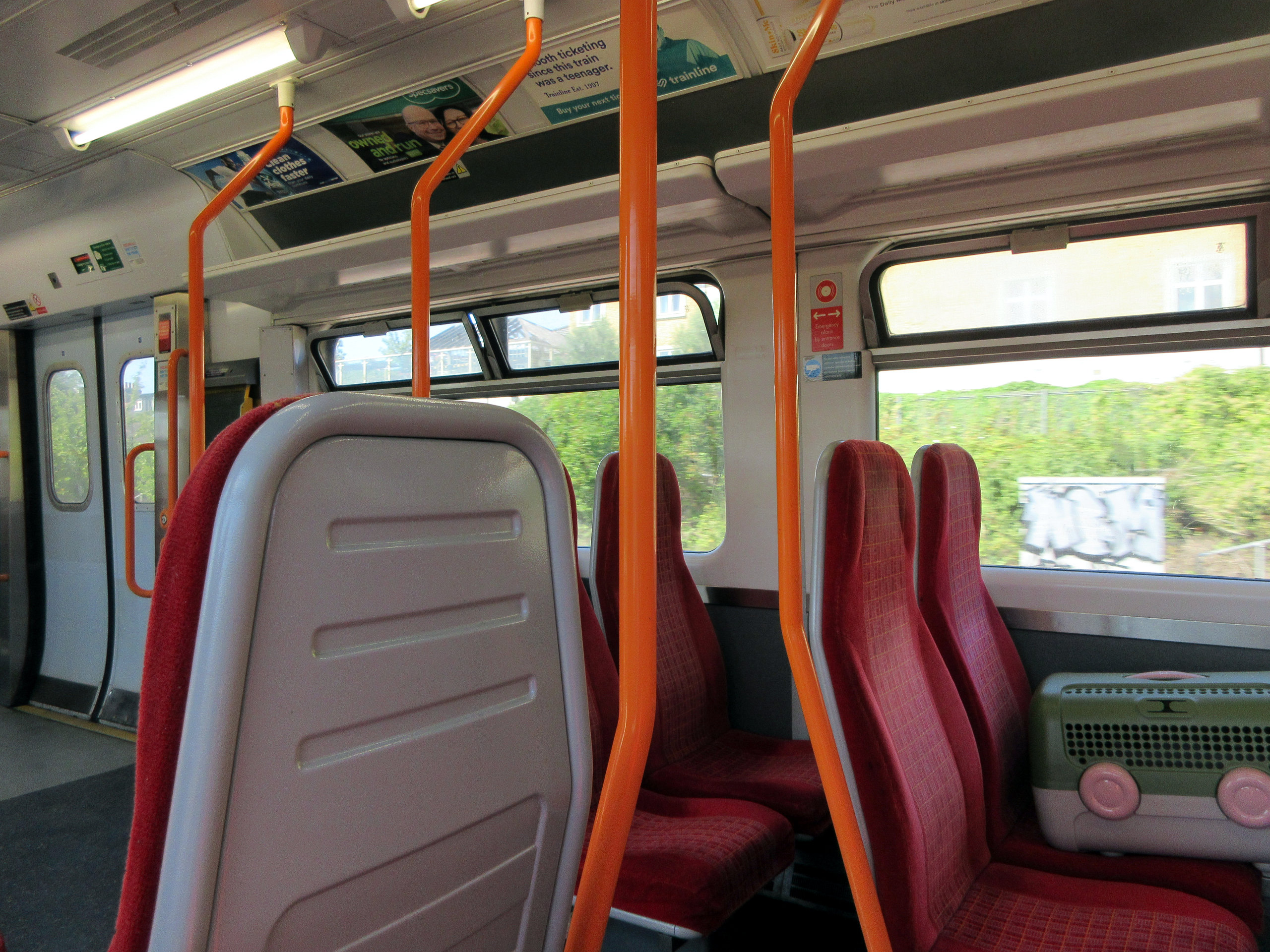
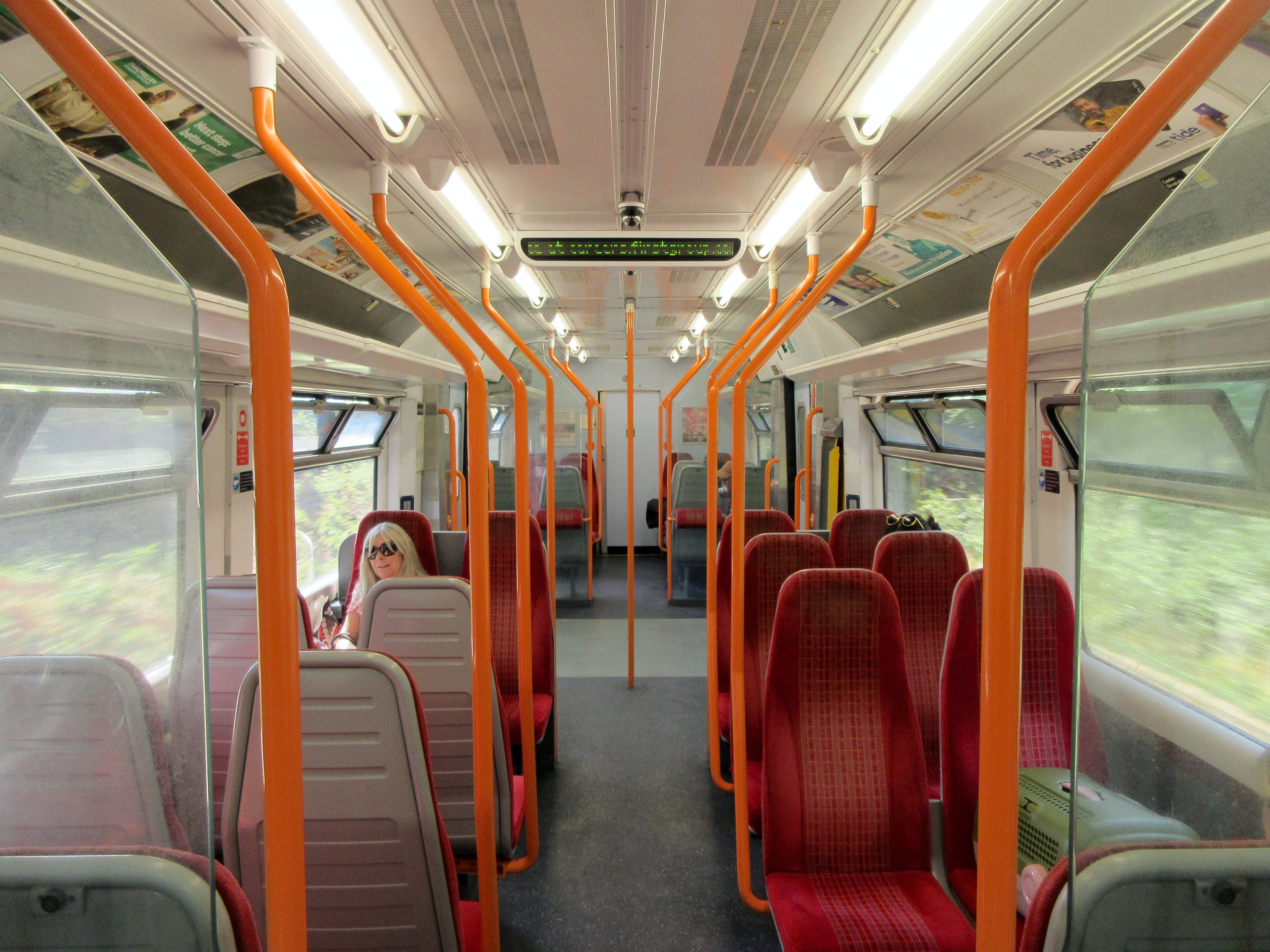
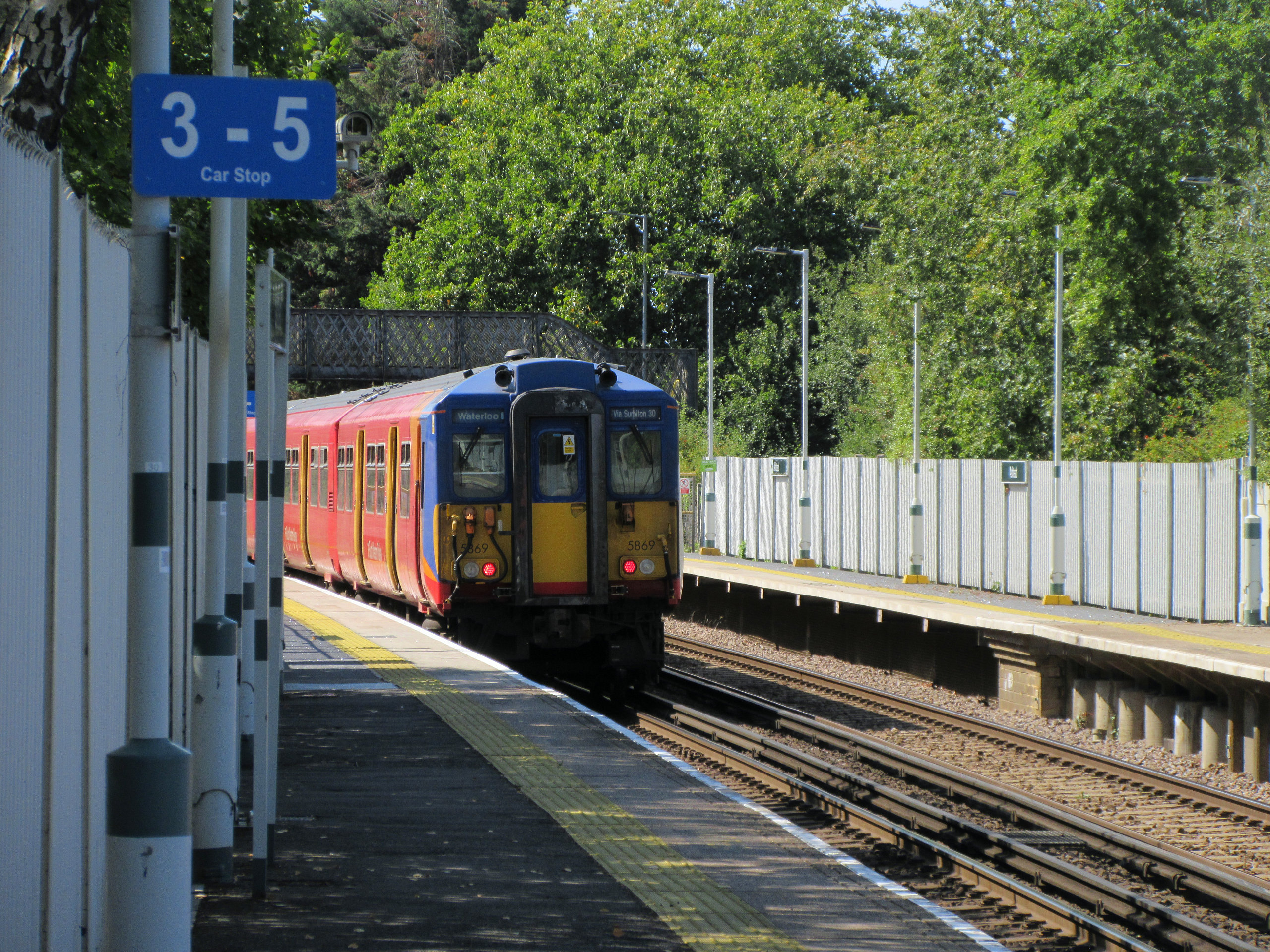
It appears that pylon hunt 44 to Ashtead (25th August 2025) will be my one and only ride in a class 455, as most are now scrapped and the remaining few withdrawn. Journeys within London are surprisingly slow, snaking their way through all the urban spaces at what often feels like a crawl. As such, ride quality is harder to assess: ride quality deteriorates with increase in speed.
One cannot describe class 455 as having an “old school vibe” as they are (were) old school, constructed between 1982 and 1985. Compared to modern rolling stock, it was strange to see opening windows; the trains really did feel old, even though from a passenger viewpoint everything was objectively fine even on a hot day. The seats were comfortable, as one would expect. It’s all the more a shame that these are now all gone.
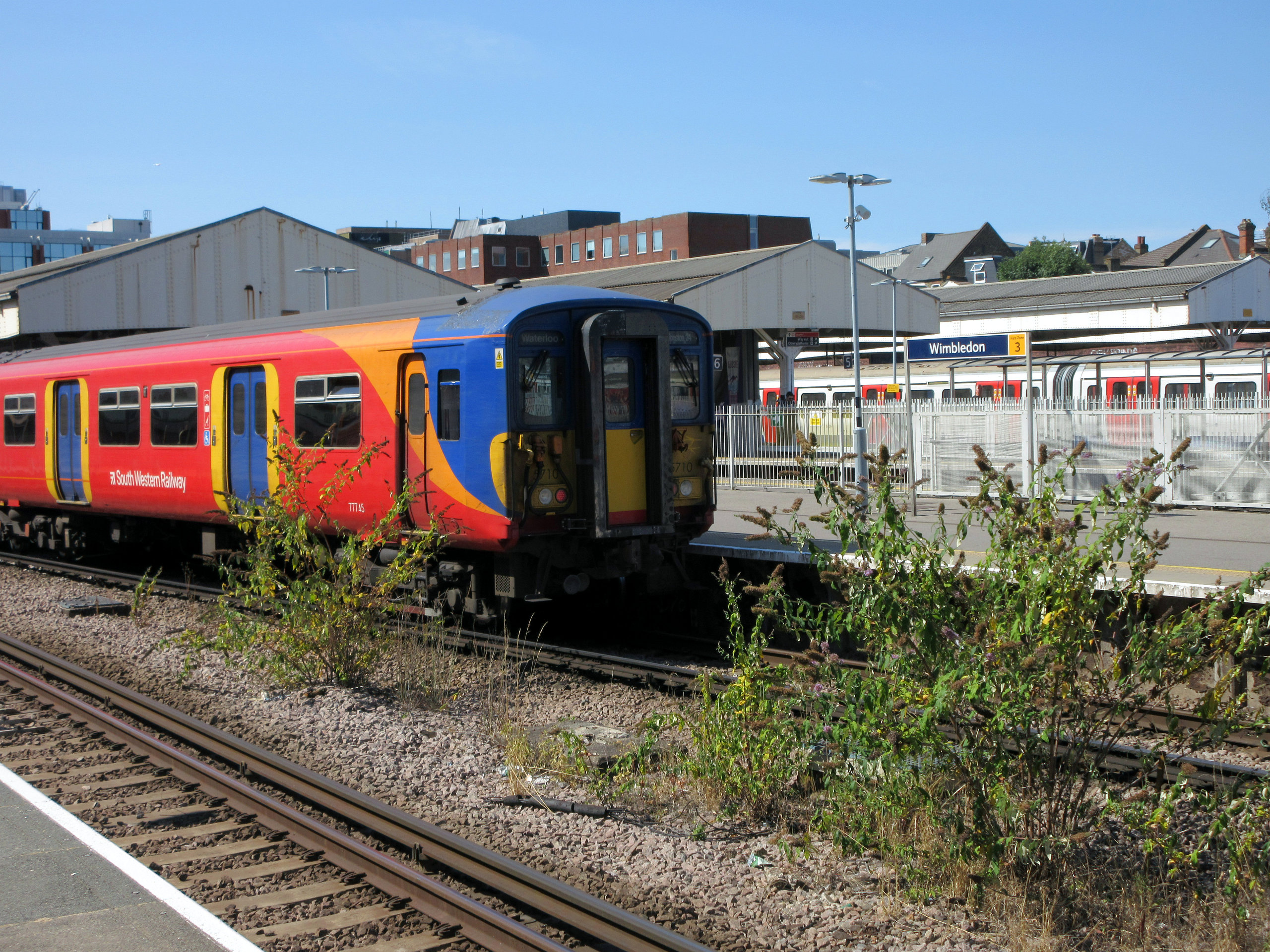
A class 455 South Western Railway service to Waterloo arriving at Wimbledon (not my train):
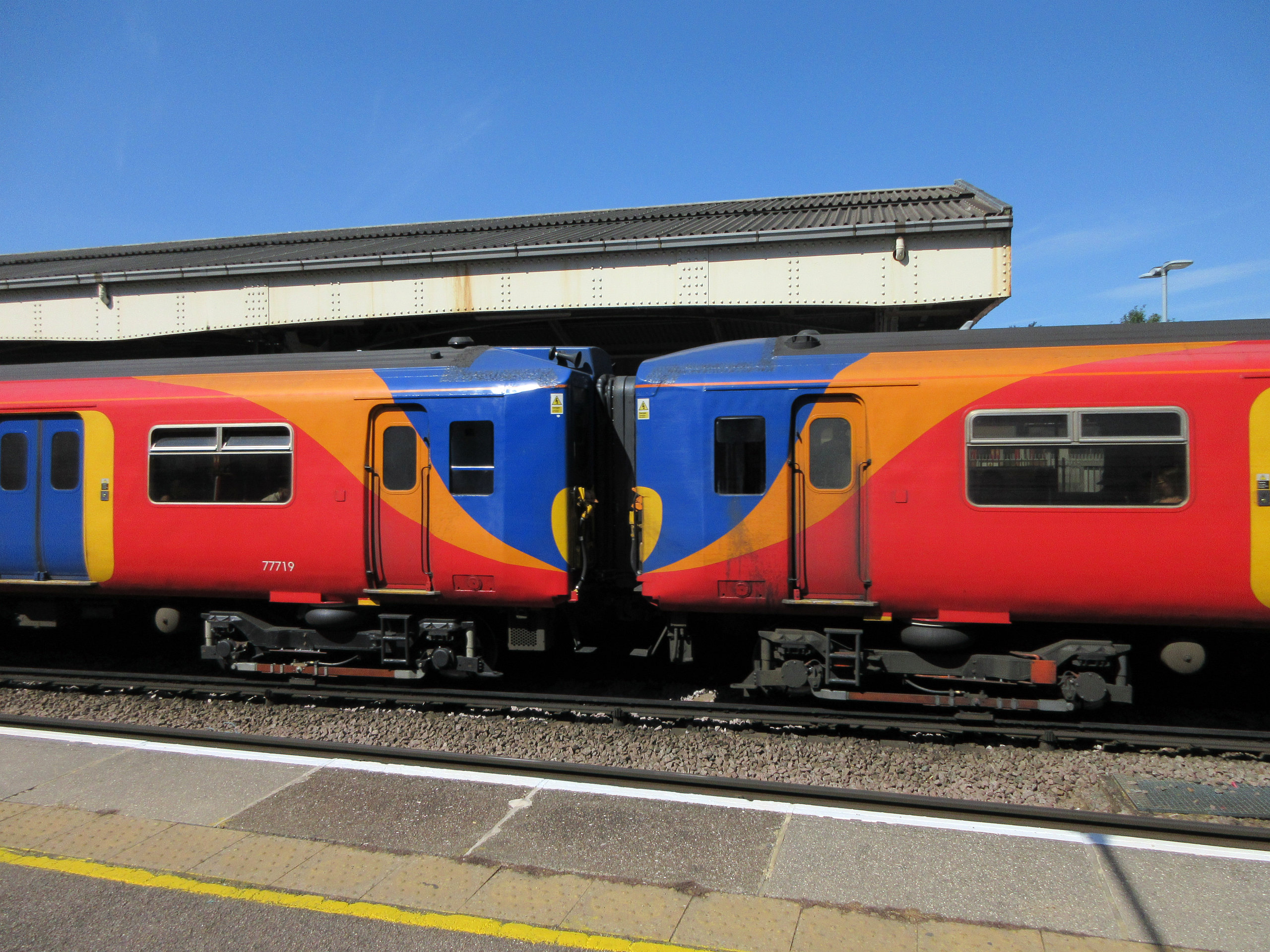
The one and only class 455 ride (the return journey was on a 377/6):
BREL Sprinter
These are also Mark 3–based, but are considered separately, being diesel-powered, which affects the passenger experience signficantly.
Class 150
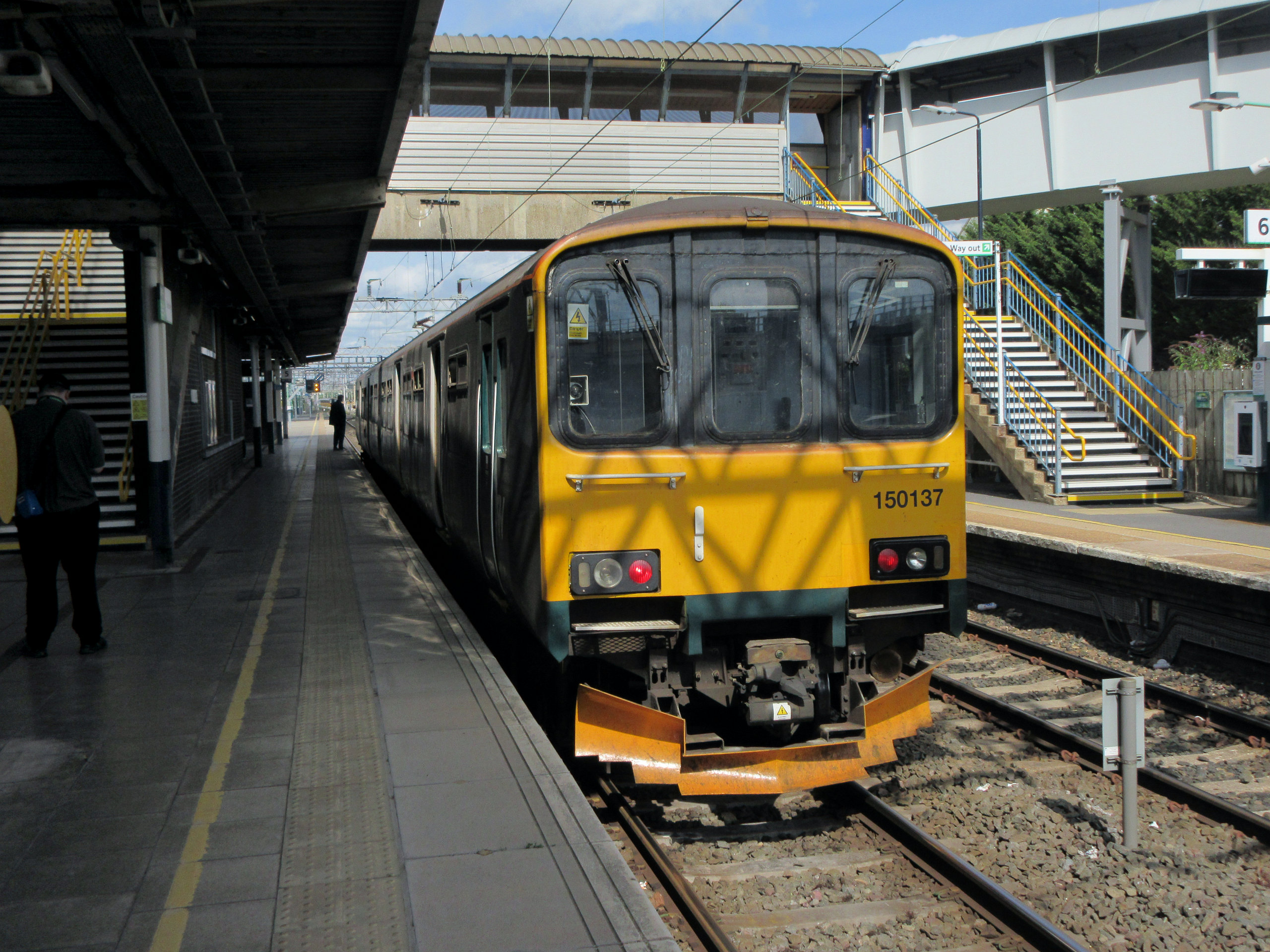
This may be the only class of Sprinter that I ever get to experience, being used on the Marston Vale Line between Bletchley and Bedford. Coming from electric trains and diesel buses, the Class 150 is a curious experience. On my first class 150 ride, I noticed that the underfloor diesel engine is very loud inside when pulling away, but fairly quiet at speed, unlike a bus where the engine is continually loud. Depending where you sit, you can feel a powerful vibration similar to an idling bus, but only when the train is moving: there isn’t the idling engine shake that buses suffer from. The unit looked to be ex-Northern from the interior, and the ride quality (albeit only 60 mph max) was very smooth. The interior was spotless and plush.
On my next Marston Vale outing, I noticed while the train was sat idling in Bletchley station (since for some reason the diesel engines can’t be stopped to save fuel and reduce diesel fumes within the station), the engine governor process is slow and erratic, leading to engine surging in a strange and random manner, causing the train to lurch while stationary. At speed, the engine is fairly loud but not that much worse than class traction 700 motors, and ride quality remains smooth. There was very little vibration at speed, and this time there was not much difference in revs and engine noise between accelerating and coasting. The ride quality is excellent.
Hitachi AT300
GWR IET (classes 800 and 802)
Britain’s infamously terrible inter-city trains … and they are not great. Like class 222s, even with 2+2 seating the aisle is comparatively narrow and the seating in the IETs is cramped. Ride quality is rough: these units are not designed for comfortable 125 mph travel. Traction motor and traction electronics noise is mercifully quiet, however, and interestingly the changeover from electric to diesel is completely unnoticeable. The quiet but very discernible diesel vibration of the class 222 is completely absent on the IETs running on diesel.
CAF Civity
Class 197
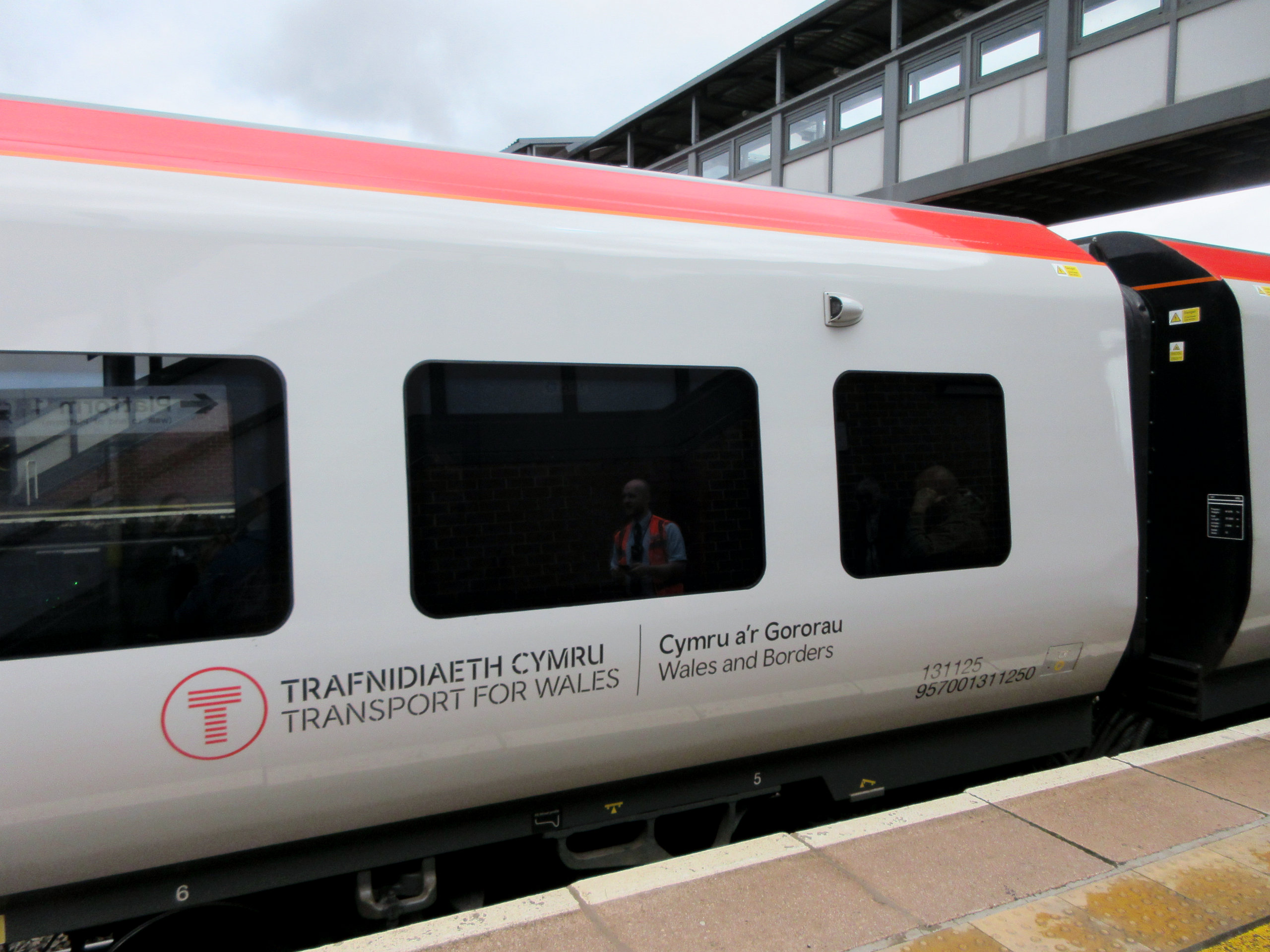
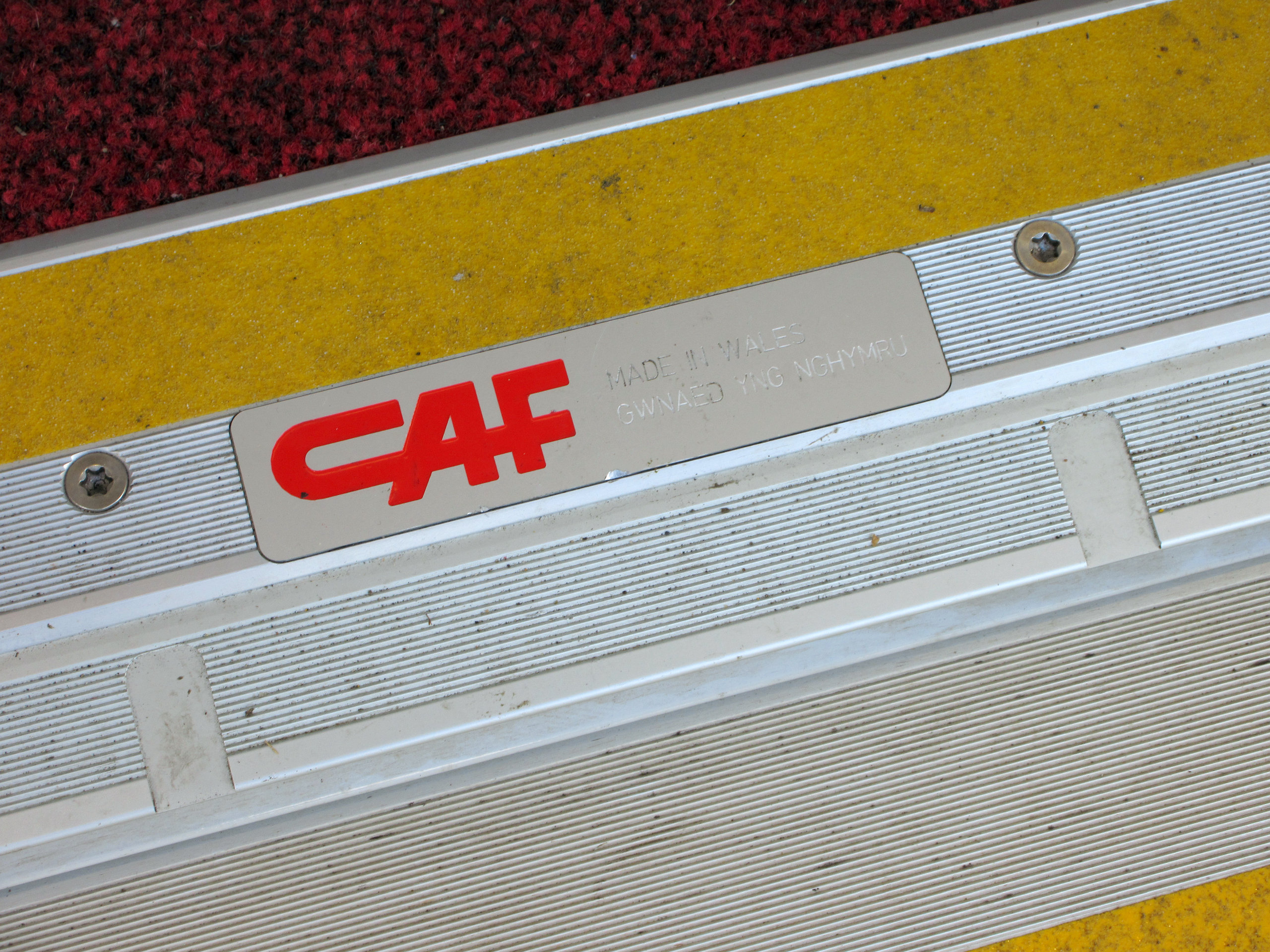
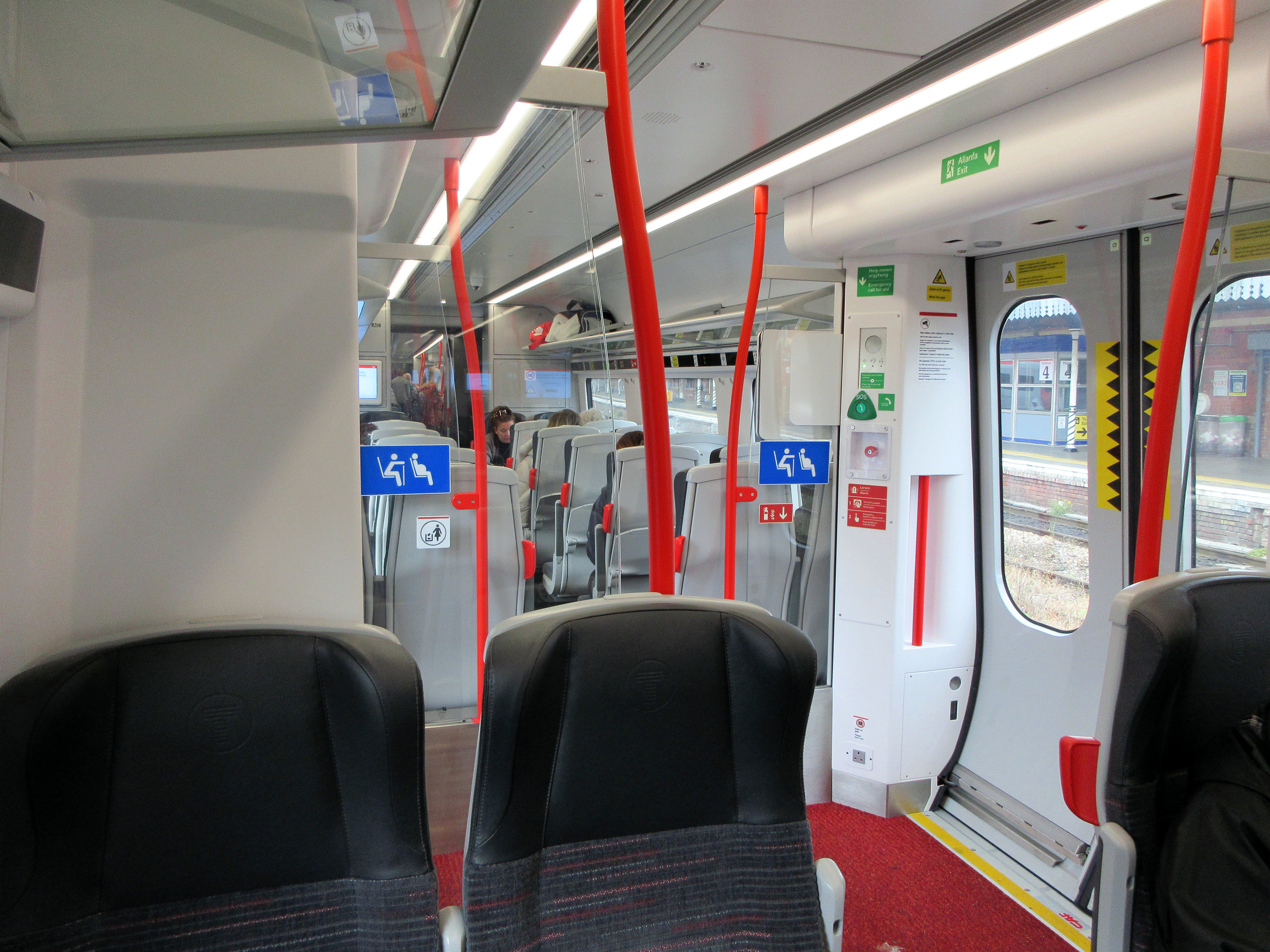
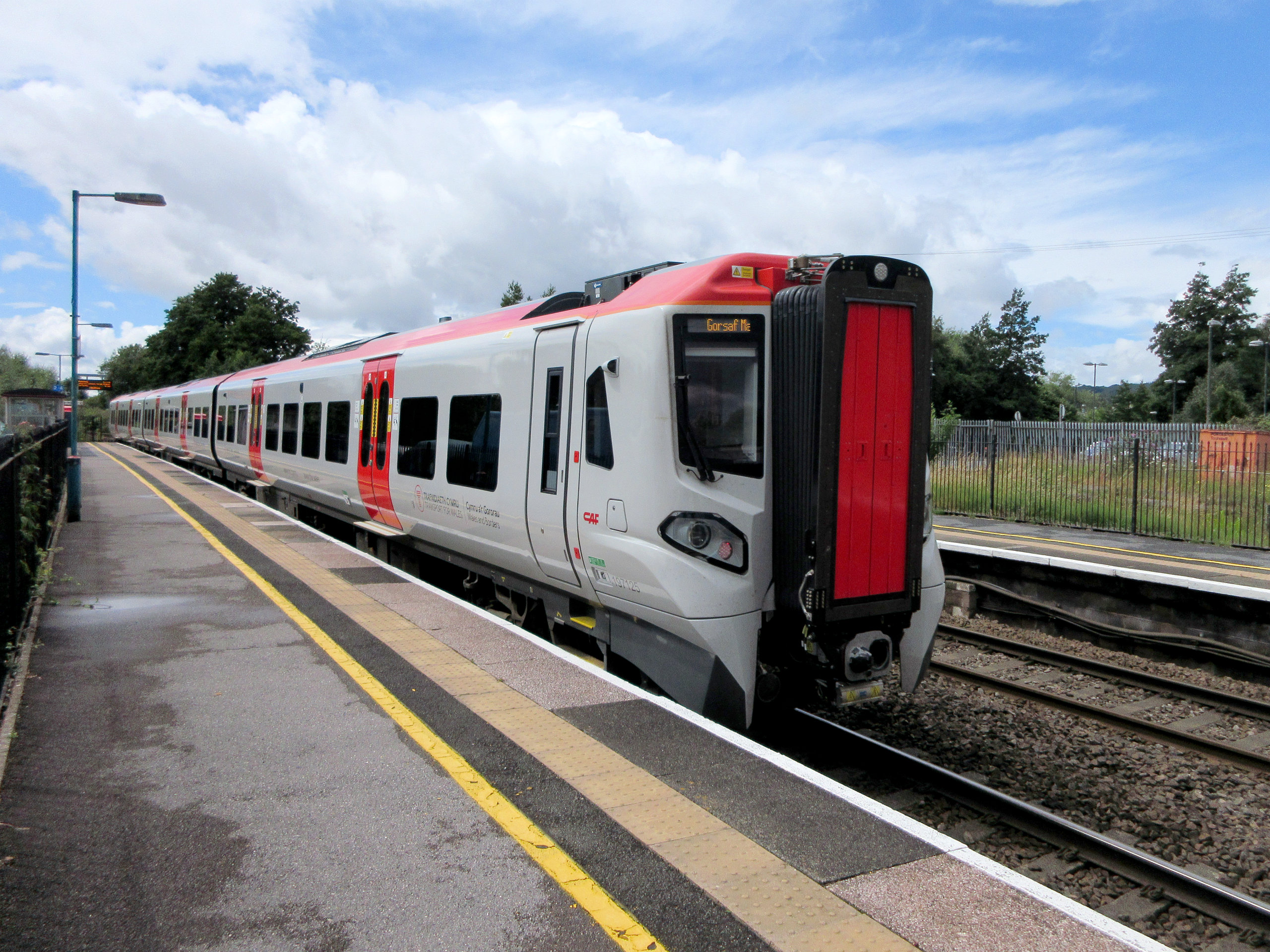
For the Lydney pylon hunt, I travelled between Gloucester and Lydney on a Transport for Wales class 197 Civity DMU. (I saw these again in Newport but the journey to Abergavenny used British Rail Mark 4 trailer coaches.) The class 197, like the Hitachi AT300-based units, is from the inside not discernibly diesel: you neither hear nor feel the engines. The class 197 ride quality is pretty decent; the only negative would be the unusually loud air compressor, which spun up repeatedly on the journey down due to disruption arising from the Severn Tunnel maintenance closure. The return journey was at full speed and there was no need to keep running the compressor.
Class 197 trains are still loud from the outside—watching them depart Newport—but from a passenger perspective they felt so much nicer than Chiltern’s Turbostars, bright and quiet.
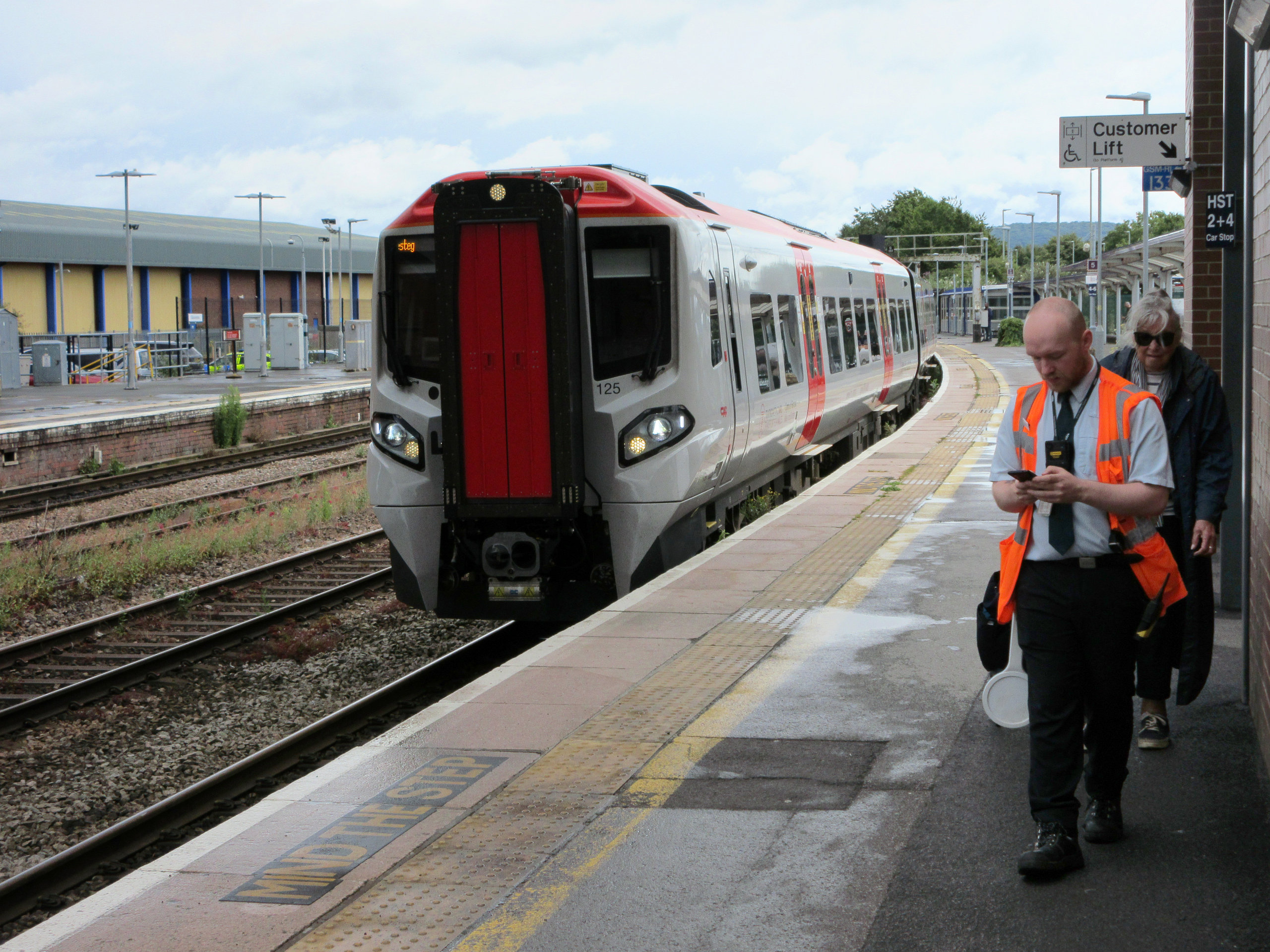
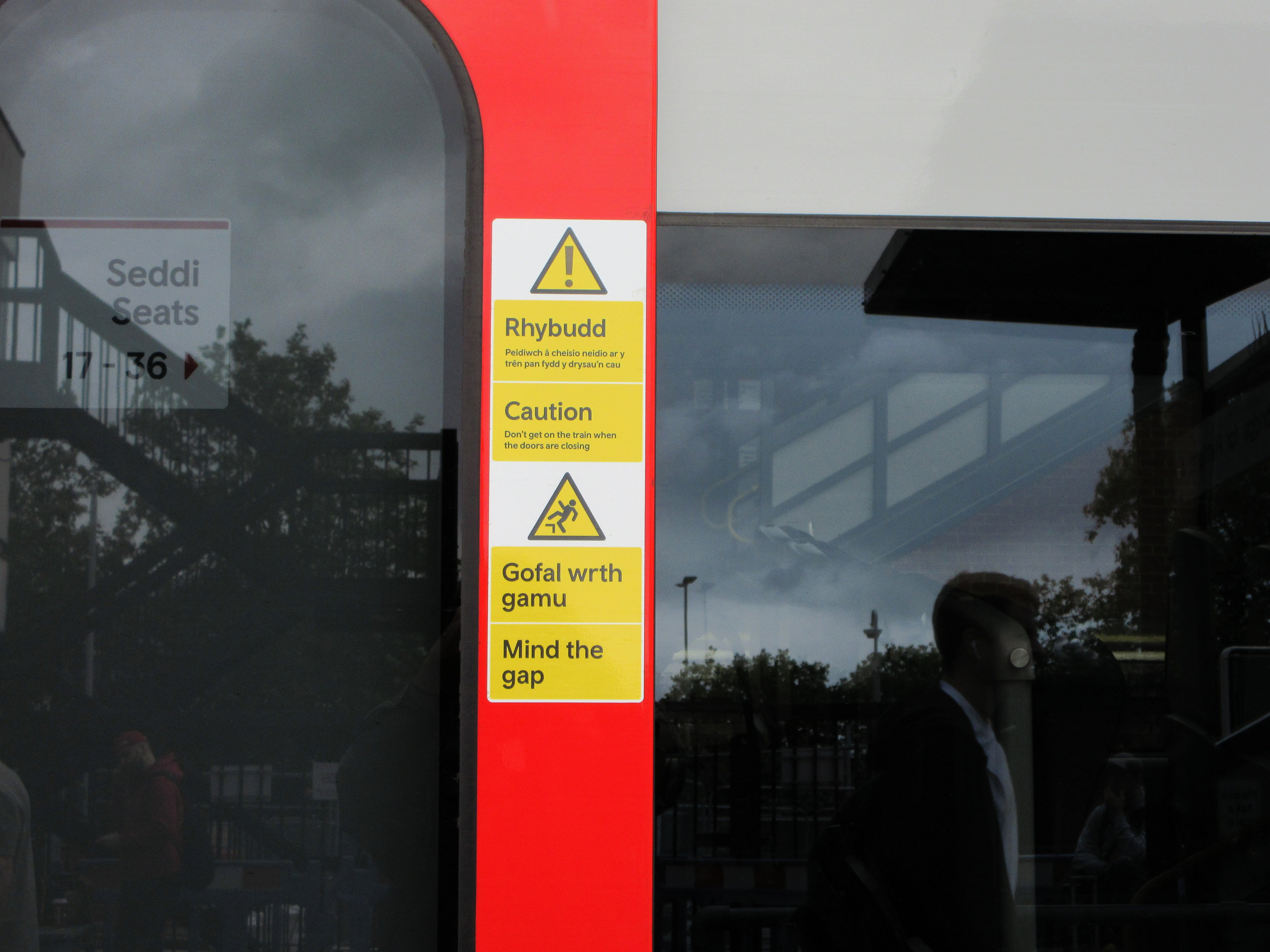
(That’s “MYE-steg”.)
Observed

Abbreviations
Abbreviations used on this page:
- ECML
- East Coast Main Line
- GWML
- Great Western Main Line
- IET
- Hitachi AT300 series “Intercity Express Train”
- MML
- Midland Main Line
- unit
- multiple-unit train
- WCML
- West Coast Main Line